24/7 Emergency Plumbing
A real person answers, a licensed plumber rolls, and you get the price before any work starts — nights, weekends and holidays included.
Learn more

McHenry County · 60156
We are not a franchise with a Lake in the Hills landing page. Our truck is parked on Pine Street, our kids go to school here, and when your basement takes on water in April we are already in the village.
Plumbing problem in Lake in the Hills? Call and a real person answers. You get the price before we start — including any after-hours premium.
Lake in the Hills grew fast — from a small lake community into one of McHenry County's larger villages, with most of its housing stock going up between the mid-1970s and the early 2000s. That growth curve is why so many houses here hit the same plumbing milestones at the same time. Original water heaters aged out together. Original sump pumps aged out together. Original fixture stops are all seizing in the same decade.
Layer on water that runs 26 to 28 grains per gallon and you get a village where plumbing wears out faster than the manufacturers' averages predict. That is not a complaint — it is just the local reality, and it is the reason every recommendation we make starts with the water rather than the symptom.
The water is the headline. At 26 to 28 grains per gallon, the village's deep-well supply is roughly six times harder than the national average. The Village publishes annual water quality reports and the supply is safe and compliant — hardness is a mineral content issue, not a safety one. But that mineral load is relentless on equipment. It cuts two to four years off a water heater, kills dishwashers and washing machines early, seizes shower cartridges, and slowly narrows the inside of supply lines.
The second factor is the ground. McHenry County soil is heavy clay that sheds water rather than absorbing it. In March, the surface thaws while the layer beneath stays frozen, so snowmelt runs sideways along that frozen shelf and straight into the drain tile around your foundation. Add a spring storm on saturated ground and every sump pit in the subdivision runs continuously for days.
The third is seasonal timing, and it is remarkably consistent. January brings frozen pipes in exterior walls and unheated crawl spaces. March and April bring sump pump failures. May and June bring sewer backups as saturated soil presses on older lines. Summer stresses water heaters and empties softener brine tanks faster than anyone expects. Fall is the window to get ahead of all of it.
Homes from the 1970s and early 1980s frequently have galvanized steel supply lines. Galvanized corrodes from the inside out, and by now many of those runs have lost half their internal diameter. If you have low pressure at every fixture at once and rusty water first thing in the morning, that is almost certainly the pipe rather than anything you can fix at the faucet.
Homes from the 1990s through the early 2000s — the bulk of the village — are typically copper. Copper resists corrosion far better, but it still scales on the inside in our water, and hot lines scale fastest. This is the group where we see pinhole leaks starting to appear on individual runs.
Newer construction and repiped homes are usually PEX, which does not corrode and handles a freeze more forgivingly. It still needs protection from mineral buildup at fixtures and appliances, which brings the conversation back to treatment.
One more thing worth knowing: many homes here built before the mid-1990s have no accessible whole-home shutoff valve inside the house. Adding one is inexpensive, and it is the single difference between a five-minute leak and a five-figure remediation.
Based on Pine Street in the 60156. No dispatch center in another state deciding whether your call is worth a truck.
Which streets have cast iron drains, which pockets see the worst sump load in April, which era of construction skipped the main shutoff. That is knowledge you only get from working here.
Fixing the symptom without addressing 26 to 28 grain hardness means you will be calling someone again in two years. We would rather solve it once.
Water heaters, sewer work and gas piping get Village permits. We pull them and show the fee on its own line, because a plumber skipping permits is cutting corners you inherit.
“We couldn't be more pleased with the waterfall stream Matt designed and built! We get compliments from everyone who visits. 10/10 would recommend!”
We serve Lake in the Hills out of our shop in Lake in the Hills, about no distance at all. Reviews are from across our whole service area — read all 11 of them here.
26 to 28 grains per gallon — extremely hard by any industry standard, and about six times the national average. The Village's annual water quality reports confirm the supply is safe and compliant; hardness is about mineral content, not safety. It is also the single biggest factor in how long plumbing equipment lasts here.
No. The whole village is home turf — Boulder Ridge to Meadowbrook to the Woods Creek side. There is no trip surcharge for being on the far end of town.
Water heater replacement, sewer line work, gas piping and new fixture installations typically require a permit. We handle the application, schedule the inspection, and itemize the fee separately so you can see exactly what it cost.
Lake in the Hills, IL
These are the calls that come out of Lake in the Hills more than any others. Every service is available across our whole area.
A real person answers, a licensed plumber rolls, and you get the price before any work starts — nights, weekends and holidays included.
Learn moreWhole-home softeners sized for real 26–28 grain water — plus repairs, resin service and salt guidance for the system you already own.
Learn morePrimary pumps, battery backups and WiFi flood sensors — sized for McHenry County spring thaw, not a catalog average.
Learn moreRepair, replace and protect tank water heaters — with the sediment and anode work our 26–28 gpg water actually demands.
Learn moreSlow sink, blocked tub, gurgling floor drain — cleared properly, with the cause diagnosed rather than guessed at.
Learn moreAquascape-trained ponds, streams and waterfalls — designed and plumbed by a licensed plumber, not a landscaper with a pump.
Learn moreWorth reading

Short answer: yes, and it is not close. At 26 to 28 grains per gallon, our water is roughly six times harder than the national average. Here is what that actually does to your house.
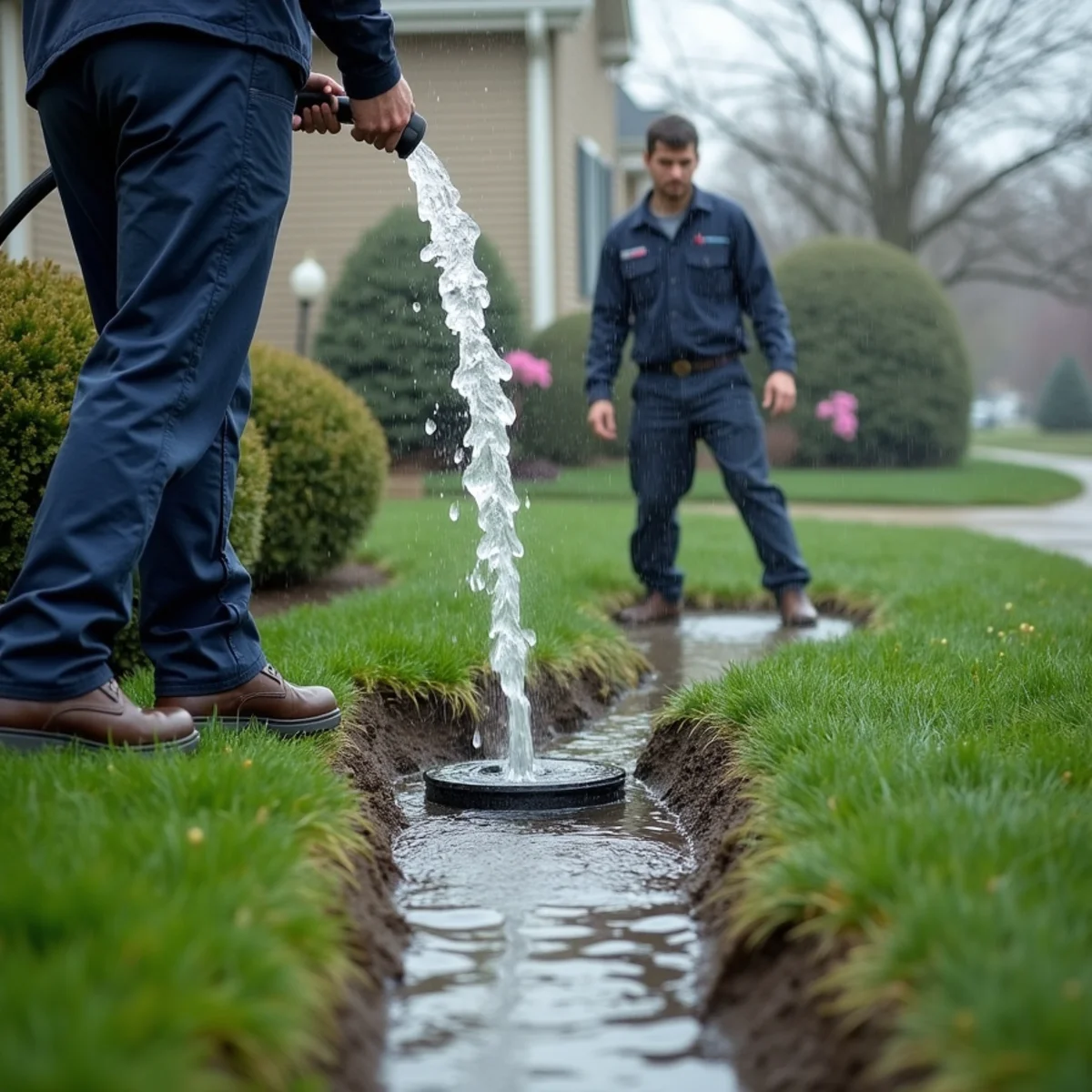
It is not bad luck and it is not one unusually big storm. Basement flooding here follows a predictable annual pattern, which means it can be planned for.
Lake in the Hills, IL
Call and talk to the person who will do the work. Free written estimates on non-emergency jobs, and a price before we start on anything urgent — nights and weekends included.
Tell us what is going on and we will get back to you with a straight answer. No obligation, no pressure.
5.0 from 11 Google reviewsLicensed & insuredFree written estimates
Our online form is not taking submissions just yet.
Please call (207) 419-2600 instead — a real person answers, nights and weekends included, and we can usually sort it faster on the phone anyway.