Water Filtration & Reverse Osmosis
Under-sink reverse osmosis and whole-home carbon filtration for water that tastes right and protects your ice maker and coffee maker.
Learn more
Artisan Water Group
That white crust on your faucet aerator is not just ugly. It is a sample of what is coating the inside of every pipe, every valve and every appliance in your house.
Need this handled today? Call and a real person answers — nights, weekends and holidays included. You get the price before we start.
Lake in the Hills draws from deep wells that run 26 to 28 grains per gallon — the range the industry calls extremely hard, and roughly six times the national average. It is safe to drink and the Village's water quality reports are clean. It is also relentlessly hard on equipment. Dishwashers and washing machines fail years early. Water heaters lose efficiency and then lose the tank. Shower valves seize. Soap stops lathering and you compensate by using more of it, every load, forever.
A correctly sized softener stops all of that. Note the word correctly — this is the part most installations get wrong, because the box that works fine in a 10-grain suburb will regenerate constantly here, burn salt, and wear out its resin years early.
You are almost certainly seeing several of these already. They are all the same problem.
Straight out of the dishwasher, dry and cloudy. That residue is calcium and magnesium left behind when the water evaporated, and no rinse aid fully defeats it.
Scale narrows the openings in shower heads and aerators first, then the pipe itself. If pressure dropped slowly over years rather than suddenly, this is usually why.
Hard water minerals bind with soap instead of foaming. If you are using noticeably more detergent, shampoo and dish soap than you did at a previous address, that is the tell.
Mineral deposits stay in the fabric through the rinse. Towels lose absorbency, darks look chalky, and fabric softener only masks it.
The chalky ring that comes back a week after you scrub it. That same deposit is forming in places you cannot scrub.
A dishwasher or washing machine that failed at seven years when it should have gone twelve. Hard water shortens appliance life by a third or more, and the failure is almost always a scaled valve or heating element.
Sizing is arithmetic, not a sales pitch. Here is the actual math and the actual install.
We test at your tap. Village supply runs 26 to 28 grains, but iron content and any private well changes the picture. Iron in particular has to be accounted for or it will foul the resin.
People in the house times roughly 70 gallons per day, times your hardness in grains. A family of four at 27 grains is about 7,500 grains a day — that number drives everything else.
You want the unit regenerating every three to five days, not daily. For most Lake in the Hills families that means a 40,000 to 64,000 grain system. Undersizing is the most common mistake we find on existing installs.
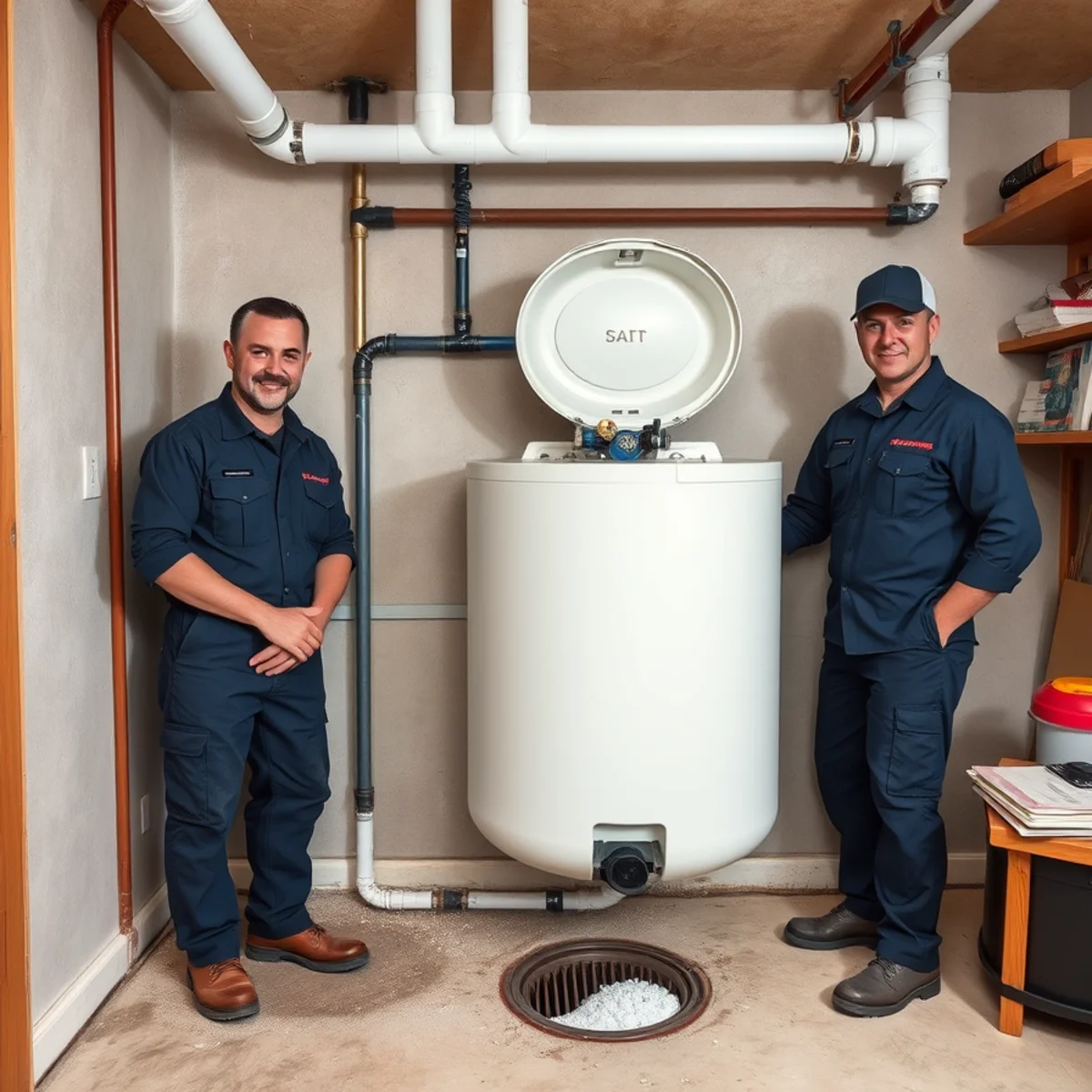
Softener goes downstream of the meter and ahead of the water heater, with a bypass valve so the house keeps water during service. Outside hose bibs stay on hard water — no reason to soften the lawn.
Regeneration discharge needs an air gap to the drain. The brine line gets routed so it cannot siphon. These are small details that cause big problems when they are skipped.
We program hardness and regeneration timing, run a manual cycle, then test the soft side at a tap to confirm we are actually at zero. Then we show you the salt lid, the bypass, and what a healthy brine tank looks like.
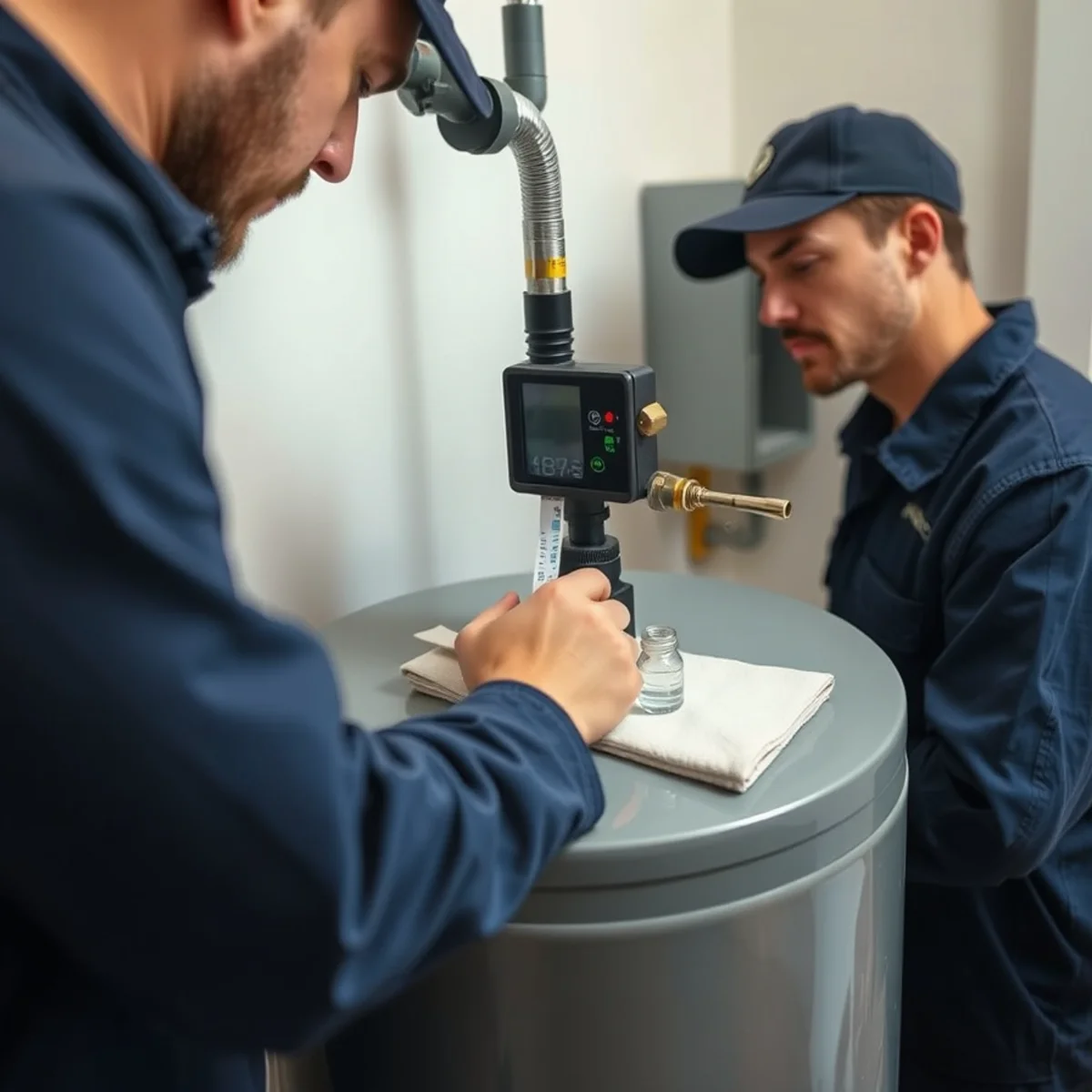
Not every hard-water complaint needs a new system. We repair softeners as often as we install them, and the failure modes are predictable.
A brine tank with a solid salt bridge across the middle looks full but is not making brine — the unit regenerates with plain water and does nothing. A fouled injector starves the brine draw. Worn resin loses capacity gradually until soft water disappears altogether, usually around the ten to fifteen year mark in our water. Control valve seals and pistons wear. Any of those is a repair, not a replacement.
The one thing we cannot repair is a unit that was too small for this water from day one. If yours regenerates daily and still leaves spots, capacity is the problem and no amount of servicing will fix it.
Check the brine tank monthly and keep salt at least a few inches above the water line. In summer — irrigation, extra laundry, more showers — check it more often, because usage climbs and the tank empties faster than you expect.
Use solar or evaporated salt pellets. Rock salt is cheaper and carries more insoluble residue, which settles in the tank and eventually finds the valve. Potassium chloride is a good option if someone in the house is on a sodium-restricted diet, though it costs more.
Here is the part people underestimate: letting a brine tank sit empty for even a week in 26 to 28 grain water means the house runs raw hard water the entire time, and scale starts forming again immediately. The softener does not coast. Empty tank equals no protection, that day.
Skip the sales pitch and think about equipment life. A water heater that reaches twelve years instead of eight. A dishwasher and washing machine that make it to their expected lifespan rather than failing a third early. Shower and faucet cartridges that do not seize. Less detergent, less soap, less descaling of every surface in the house.
Add the appliance replacements you did not make and the efficiency you did not lose to a scaled heating element, and softening in this village is not a luxury purchase. It is the cheapest form of plumbing insurance available here — which is exactly why we build every other recommendation around it.
Softeners are one of the easier plumbing purchases to compare, as long as you compare the right things.
We will test your water free and show you the numbers before you commit to anything. If your existing softener can be repaired instead of replaced, we will tell you.
26 to 28 grains per gallon — roughly six times the national average and firmly in the range the industry classifies as extremely hard. The Village publishes annual water quality reports confirming the supply is safe and compliant; hardness is a mineral content issue, not a safety issue.
Most families of three to five need 40,000 to 64,000 grains of capacity here. The calculation is people times about 70 gallons per day times 27 grains, sized so the unit regenerates every three to five days rather than daily.
No. Ion exchange swaps calcium and magnesium for a very small amount of sodium — for typical hardness that is a fraction of what is in a slice of bread. If you dislike the taste of softened water, an under-sink reverse osmosis unit gives you unsoftened-tasting drinking water without giving up whole-home protection.
For a whole-home unit, yes. It has to be tied into the main ahead of the water heater, needs a properly air-gapped drain, a bypass valve, and in most cases a permit. A softener plumbed backward or drained without an air gap creates problems well beyond hard water.
Ten to fifteen years in our water with regular salt and occasional service. The resin bed wears out gradually rather than failing outright, so the usual sign is soft water that quietly stops being soft.
Often needed together
These come up on the same houses more often than not.
Under-sink reverse osmosis and whole-home carbon filtration for water that tastes right and protects your ice maker and coffee maker.
Learn moreRepair, replace and protect tank water heaters — with the sediment and anode work our 26–28 gpg water actually demands.
Learn moreCopper and PEX repipes for galvanized and failing systems — planned in phases so your water is back on every night.
Learn moreWorth reading first
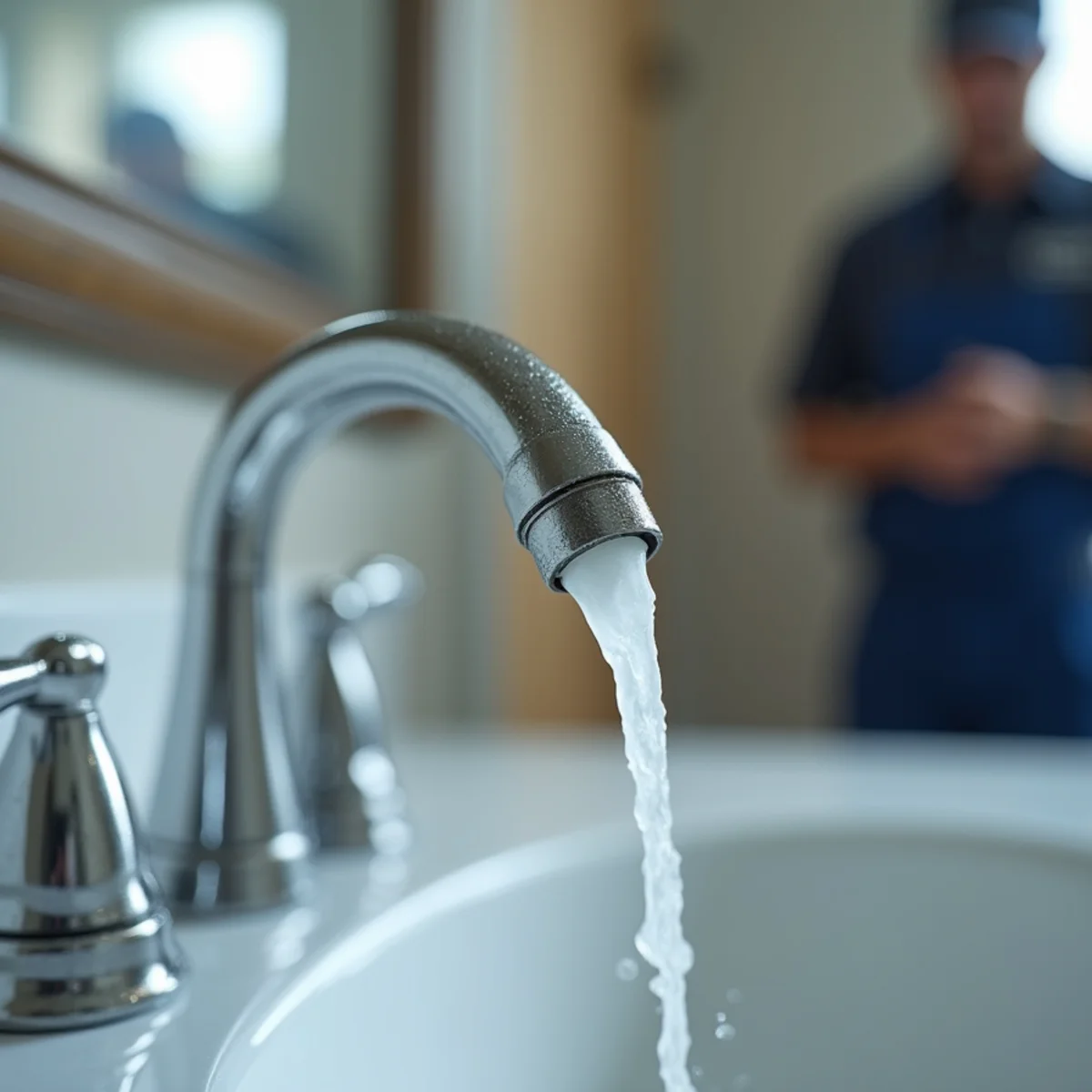
Short answer: yes, and it is not close. At 26 to 28 grains per gallon, our water is roughly six times harder than the national average. Here is what that actually does to your house.
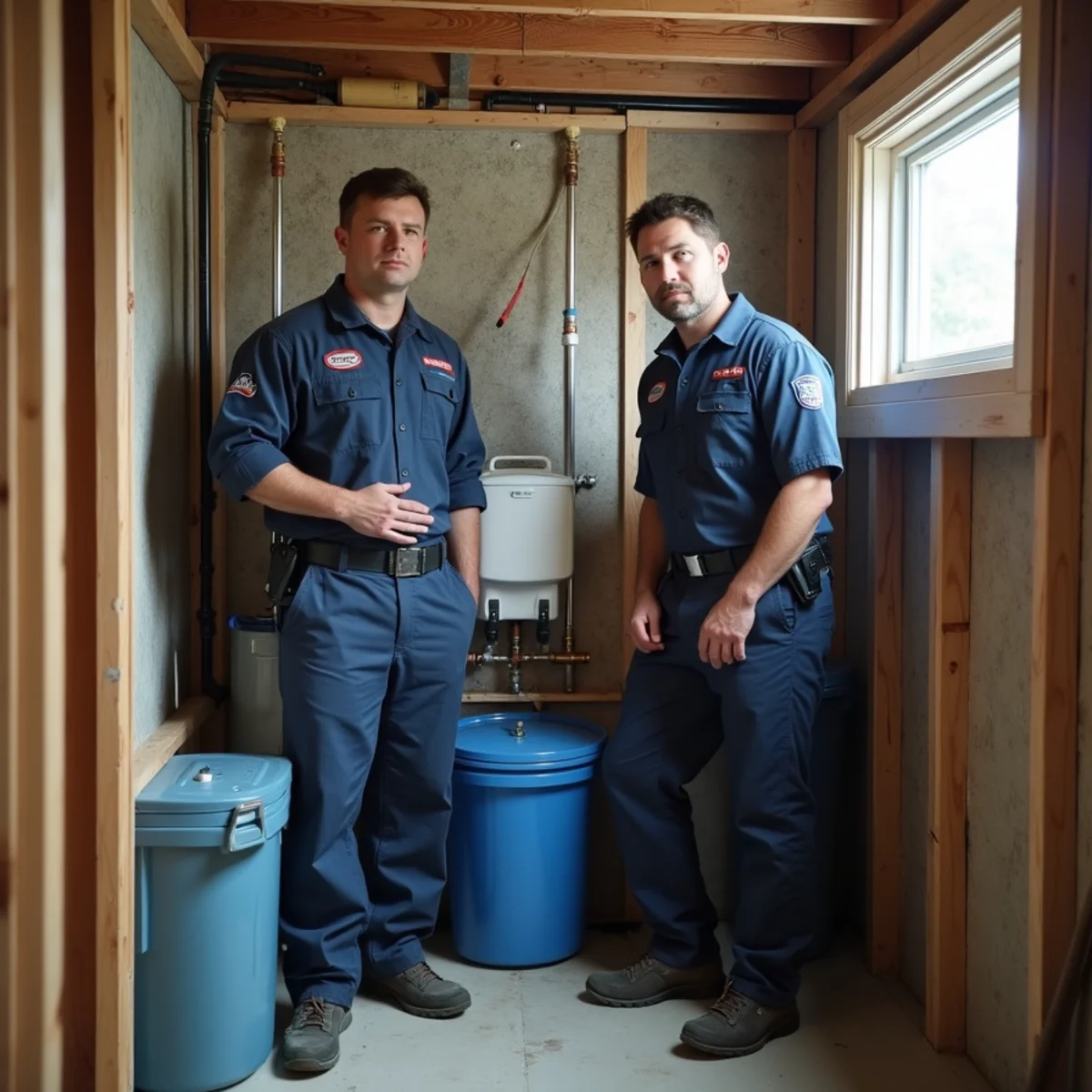
One protects your plumbing. The other improves what you drink. Confusing them is the most expensive mistake in home water treatment.
Water Softener Installation & Repair
Call and talk to the person who will do the work. Free written estimates on non-emergency water softener installation & repair, and a price before we start on anything urgent.
Tell us what is going on and we will get back to you with a straight answer. No obligation, no pressure.
5.0 from 11 Google reviewsLicensed & insuredFree written estimates
Our online form is not taking submissions just yet.
Please call (207) 419-2600 instead — a real person answers, nights and weekends included, and we can usually sort it faster on the phone anyway.
We are a licensed, insured, owner-operated shop based on Pine Street in Lake in the Hills. That means the person quoting the job is the person doing it, and nobody here is measured on how much they sold you.
Every recommendation starts with the water. At 26–28 grains per gallon, our supply is roughly six times harder than the national average, and it is the single biggest factor in how long anything in your plumbing lasts. Fixing the symptom without addressing that is how you end up calling someone again in two years.
And when a permit is required — water heaters, sewer work, gas piping — we pull it and show the fee on its own line. Ask every plumber you talk to for the same. Read more in our guide to plumbing permits in McHenry County.