Leak Detection & Repair
Find the hidden leak before you open the wall — acoustic, thermal and pressure diagnostics, then a proper repair.
Learn more
Artisan Water Group
This is the part of our work that surprises people, and it is the reason we are called Artisan Water Group rather than Artisan Plumbing.
Need this handled today? Call and a real person answers — nights, weekends and holidays included. You get the price before we start.
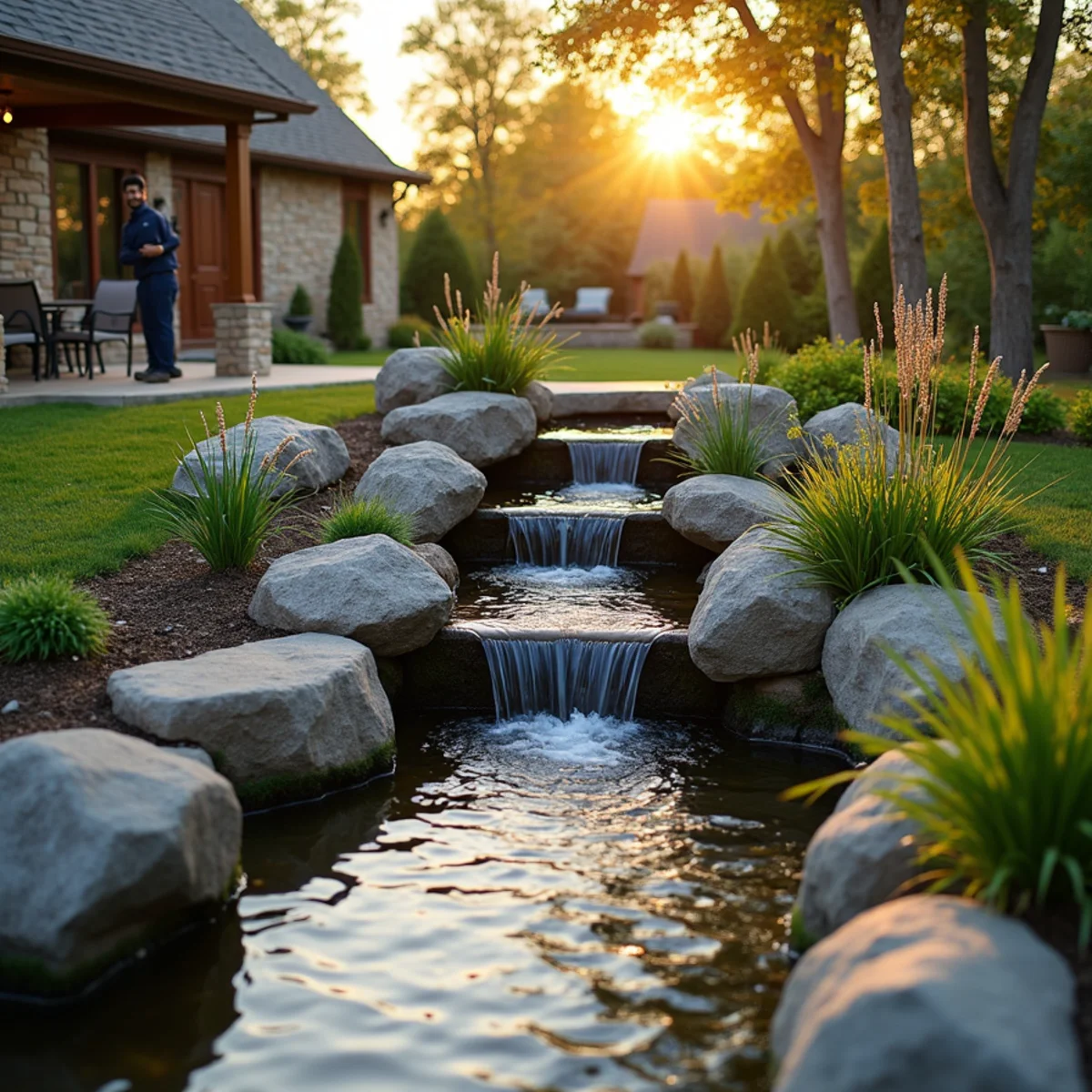
We design and build backyard ponds, streams and waterfalls — Aquascape-trained, and built by someone whose day job is water under pressure. That combination matters more than it sounds. A water feature is a closed hydraulic system with a pump, a head height, a filtration loop, a liner and a return. Most of what goes wrong with backyard ponds is not landscaping. It is plumbing.
Our published reviews are full of this work: a pond rebuilt with a three-step stream, a waterfall re-aimed to face the patio, a mucky pond brought back to clear water with the fish held safely in pond water during the cleanout. It is the part of the job we enjoy most, and it is the one thing on this page that no other plumber in Lake in the Hills offers.
New construction, renovation of a feature you inherited, or the seasonal maintenance that keeps one healthy.
Excavation, shelving for plants, liner and underlayment, skimmer and biological filtration, and a pump sized to the actual volume and head — not the number on the box.
The most satisfying work we do. Grade, boulder placement, and the sound. A waterfall aimed at the patio rather than away from it changes the whole yard.
A waterfall and stream disappearing into a gravel reservoir — all the sound and movement, no open water. Popular with families with small children and with anyone who does not want fish.
Full drain, fish held safely in their own pond water, rocks and gravel washed, debris and muck removed, filters serviced, and a beneficial bacteria treatment to restart the biology.
A pond losing water is a diagnostic problem — liner, stream edge, plumbing joint, or simple evaporation. We isolate the loss instead of guessing.
Replacing an undersized or failing pump, adding proper biological filtration, or lighting a waterfall so the feature works after dark, which is when most people are home to enjoy it.
Most builds happen in a single focused stretch. Cleanouts are usually a one-day job.
Where you sit, where you walk, where the sound should land, and where water naturally wants to go. We also check grade, existing drainage, and where power can be brought in safely.
A waterfall that faces away from the patio is a wasted waterfall. We orient the feature to the places you actually use, and step the stream so it makes the sound you want rather than a random one.
Excavation, plant shelves, underlayment and liner, then skimmer and biological falls set at correct elevations. Getting elevations right is what keeps a stream from leaking at the edges later.
Pump sized to volume and head height, flexible pipe run without unnecessary elbows, valves where they will be needed for service, and everything accessible. This is where a plumbing background pays off — the mechanical side is done to trade standard.
Boulder and gravel placement so the feature reads as though water found it rather than as though someone stacked rocks around a hole. Then fill, dechlorinate, and start the biology.
We show you the skimmer basket, the pump, the valves, and what routine care looks like through the seasons. Then we are available for the spring cleanout and the fall shutdown.
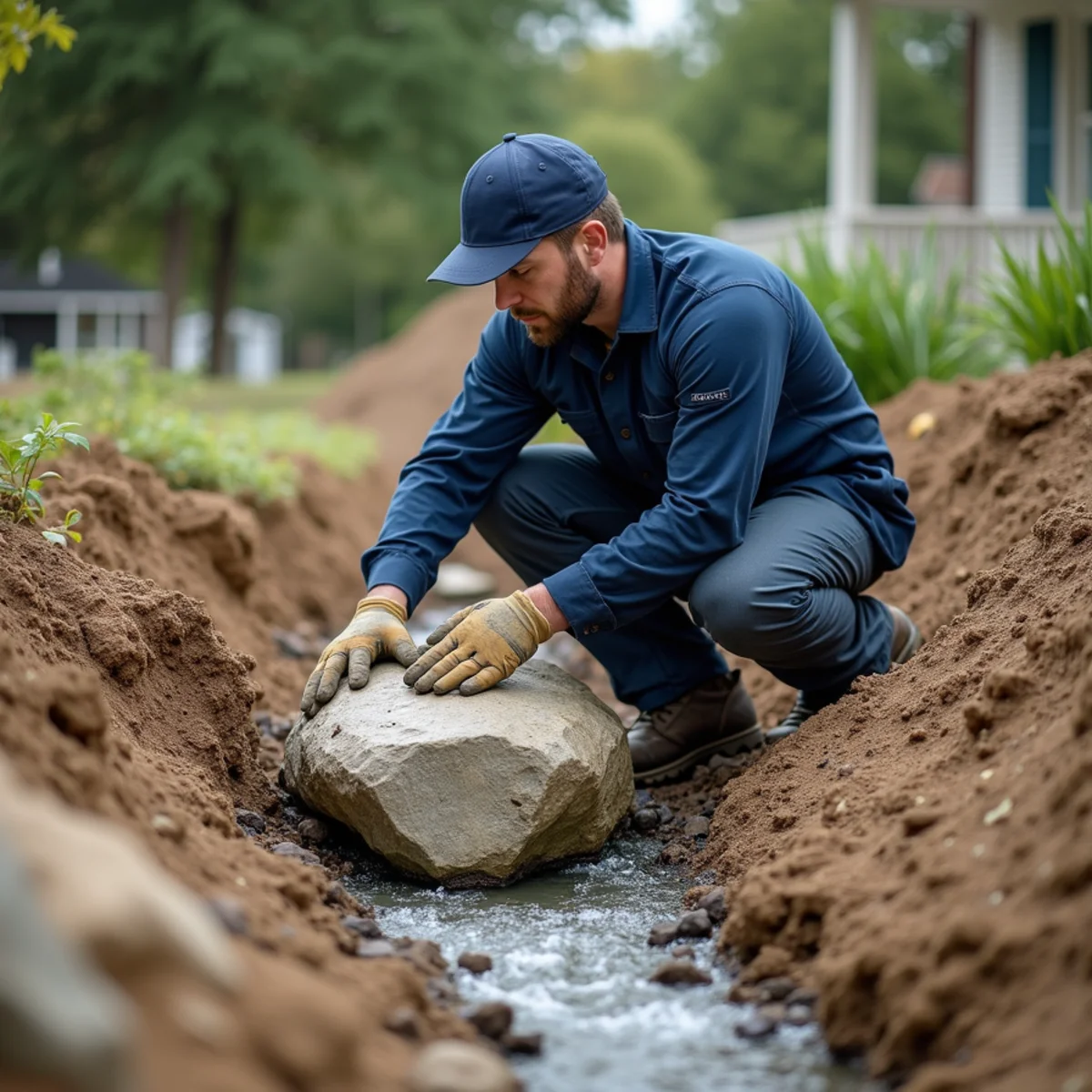
Walk any neighborhood with backyard ponds and you will find the same failures. Pumps that were sized by gallons per hour without ever accounting for head height, so the waterfall trickles. Stream edges built a half inch too low, so water escapes into the soil and the homeowner tops off with a hose every week, wondering where it goes. Plumbing buried under a boulder that now has to be moved to service a fitting. Skimmers set at the wrong elevation.
Every one of those is a plumbing mistake made by someone thinking about landscaping. Head height, flow rate, friction loss through pipe and fittings, valve placement, serviceability — that is the vocabulary of the trade, and it is exactly what a water feature is made of.
That is the whole idea behind Artisan Water Group. The rock work should look like nature did it. The mechanical system behind it should be built the way we would build the plumbing in your house.
Every established pond in this climate benefits from an annual cleanout, usually once water temperatures start climbing in spring. Leaves that sank in the fall break down over winter into a layer of muck that feeds algae and pulls oxygen out of the water.
The process is straightforward and worth doing properly. Drain the pond, holding the fish in a large container of their own pond water so the change is not a shock to them. Wash the rock and gravel, remove the accumulated muck, and clean out the skimmer and biological falls. Then refill, dechlorinate, and treat with beneficial bacteria to restart the biological filtration before the summer load arrives.
Done every spring, a pond stays clear with very little intervention through the season. Skipped for a couple of years, the muck layer becomes the dominant feature of the ecosystem, and clearing it becomes a much bigger job. Homeowners in Lake in the Hills, Algonquin and Crystal Lake book these from March onward, and the calendar fills quickly.
Our 26 to 28 grain water shows up in ponds too, though it behaves differently than it does inside a house.
Topping off with hard tap water concentrates minerals as water evaporates through summer, which nudges pH and hardness upward over the season and can leave a white line on rocks at the waterline. In a planted pond with good biology, this is generally manageable. In a koi pond, it is worth monitoring, because koi are sensitive to swings.
The practical answers are simple: top off with smaller amounts more often rather than large refills, always dechlorinate municipal water before it goes in, and keep the biological filtration healthy so the system buffers itself. If a feature needs an automatic fill valve, we plumb it correctly with a backflow preventer, because a pond auto-fill teed carelessly into household supply is a cross-connection — and that is a plumbing problem, not a landscaping one.
Ponds range more than any other job we quote, because a three-foot bubbling boulder and a twenty-foot stream with a koi pond are not the same project.
Design consultations are free. We would rather talk you into the feature you will actually use than the biggest one your yard could hold.
Yes — it is where the company name comes from. We are Aquascape-trained and build ponds, streams, waterfalls and pondless features, and we bring a licensed plumber's approach to the pump, plumbing and filtration side that most water feature installers do not have.
Less than people expect if it is built correctly. Empty the skimmer basket weekly in season, keep an eye on the water level, and have an annual spring cleanout. A properly sized biological filter does most of the work for you.
A waterfall and stream that disappear into a hidden gravel reservoir instead of an open pond. You get the sound and movement of running water with no standing water, no fish to care for, and less maintenance — a popular choice for families with young children.
Regularly, and it is some of our favorite work. Re-aiming a waterfall toward the patio, adding a stream, correcting a stream edge that leaks, replacing an undersized pump, or repairing a liner. A renovation often produces a better feature than the original build at a fraction of a new-build cost.
Anytime the ground is workable — roughly April through October in McHenry County. Spring is busiest because it is also cleanout season, so if you want a build finished before summer, plan the conversation for late winter.
Often needed together
These come up on the same houses more often than not.
Find the hidden leak before you open the wall — acoustic, thermal and pressure diagnostics, then a proper repair.
Learn morePermitted, pressure-tested gas line work for ranges, dryers, grills, fire pits and generators — plus leak diagnosis.
Learn moreUnder-sink reverse osmosis and whole-home carbon filtration for water that tastes right and protects your ice maker and coffee maker.
Learn moreWorth reading first
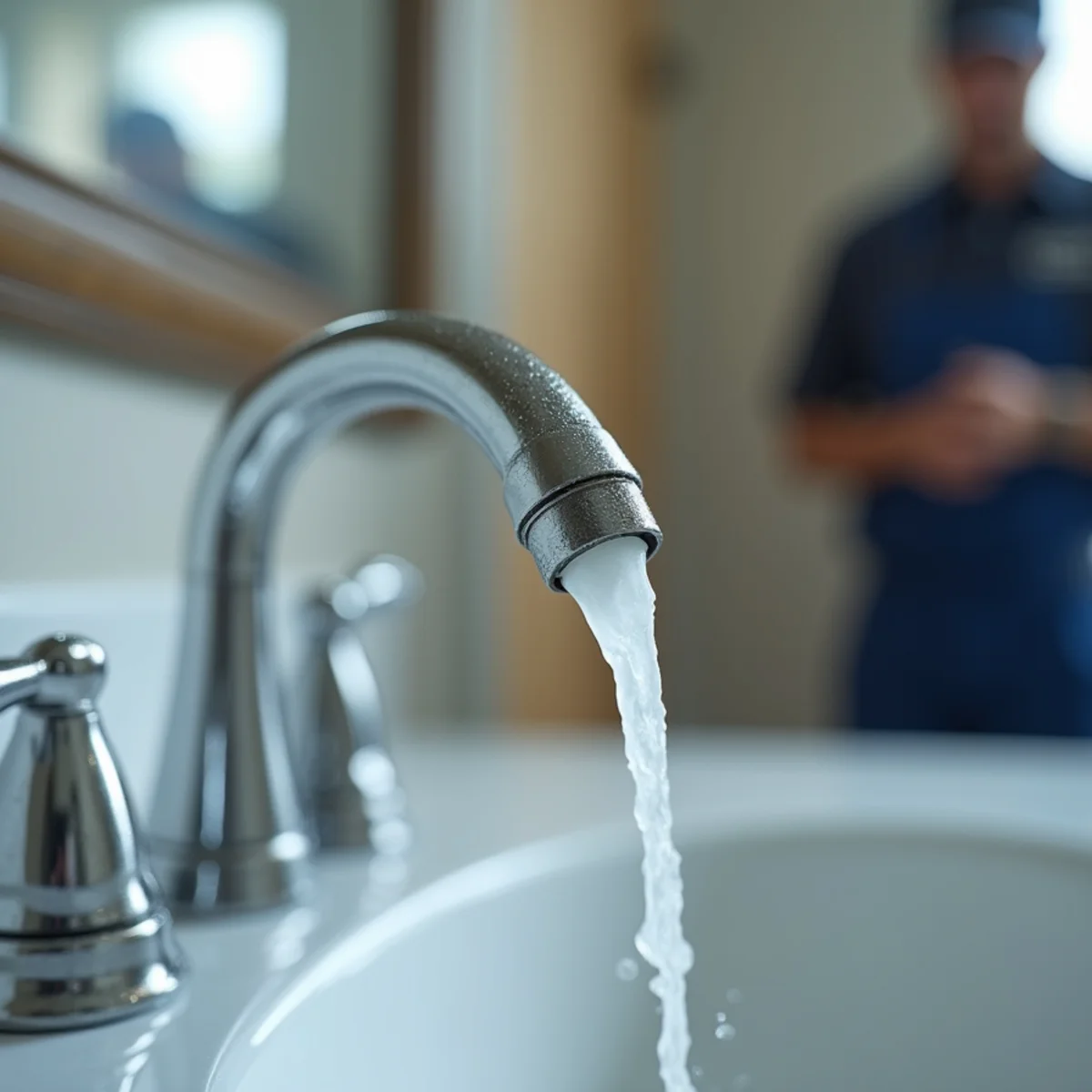
Short answer: yes, and it is not close. At 26 to 28 grains per gallon, our water is roughly six times harder than the national average. Here is what that actually does to your house.
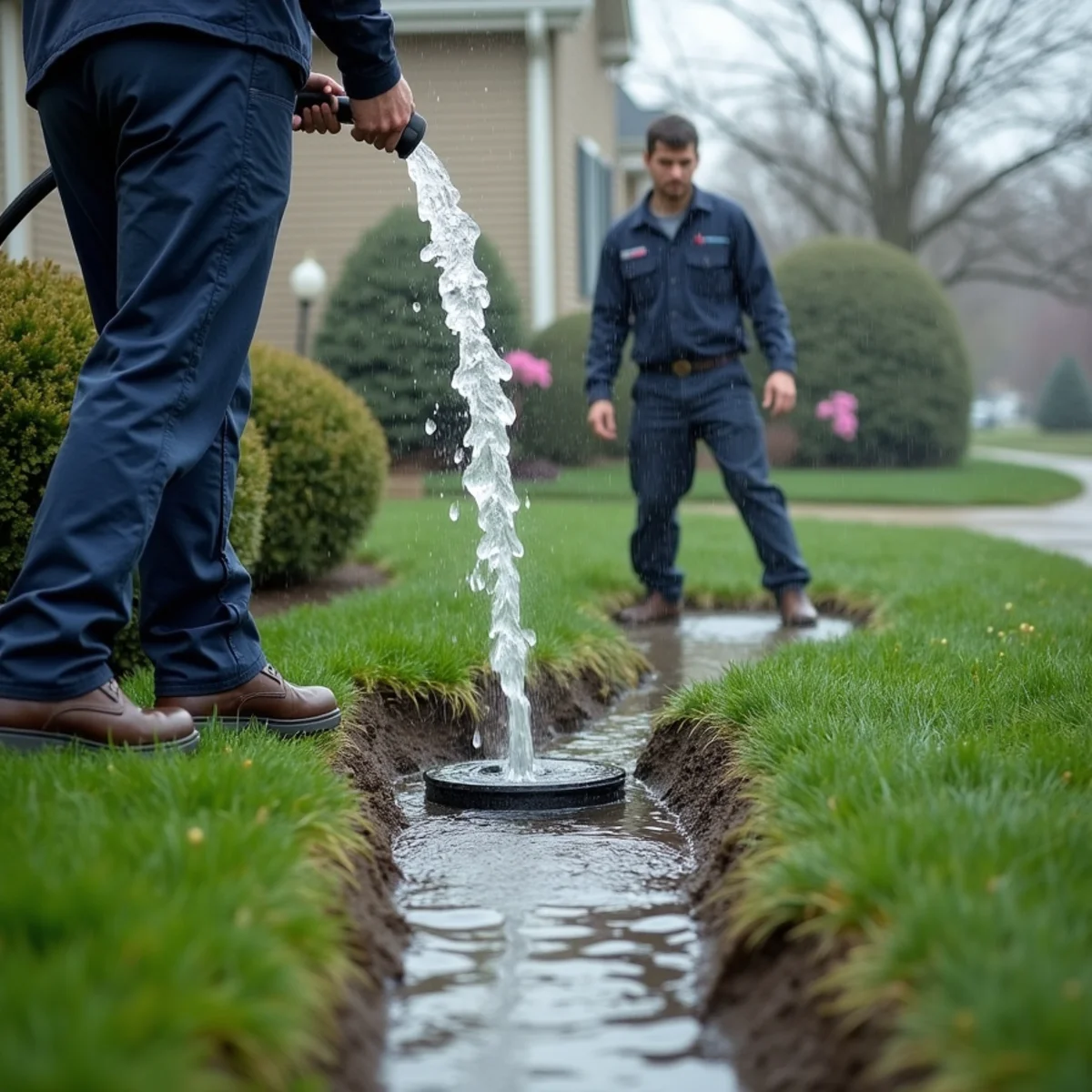
It is not bad luck and it is not one unusually big storm. Basement flooding here follows a predictable annual pattern, which means it can be planned for.
Pond & Waterfall Construction
Call and talk to the person who will do the work. Free written estimates on non-emergency pond & waterfall construction, and a price before we start on anything urgent.
Tell us what is going on and we will get back to you with a straight answer. No obligation, no pressure.
5.0 from 11 Google reviewsLicensed & insuredFree written estimates
Our online form is not taking submissions just yet.
Please call (207) 419-2600 instead — a real person answers, nights and weekends included, and we can usually sort it faster on the phone anyway.
We are a licensed, insured, owner-operated shop based on Pine Street in Lake in the Hills. That means the person quoting the job is the person doing it, and nobody here is measured on how much they sold you.
Every recommendation starts with the water. At 26–28 grains per gallon, our supply is roughly six times harder than the national average, and it is the single biggest factor in how long anything in your plumbing lasts. Fixing the symptom without addressing that is how you end up calling someone again in two years.
And when a permit is required — water heaters, sewer work, gas piping — we pull it and show the fee on its own line. Ask every plumber you talk to for the same. Read more in our guide to plumbing permits in McHenry County.