Sewer Line Repair & Replacement
Spot repairs, section replacement and full laterals — quoted from camera footage you watch with us, never from a guess.
Learn more
Artisan Water Group
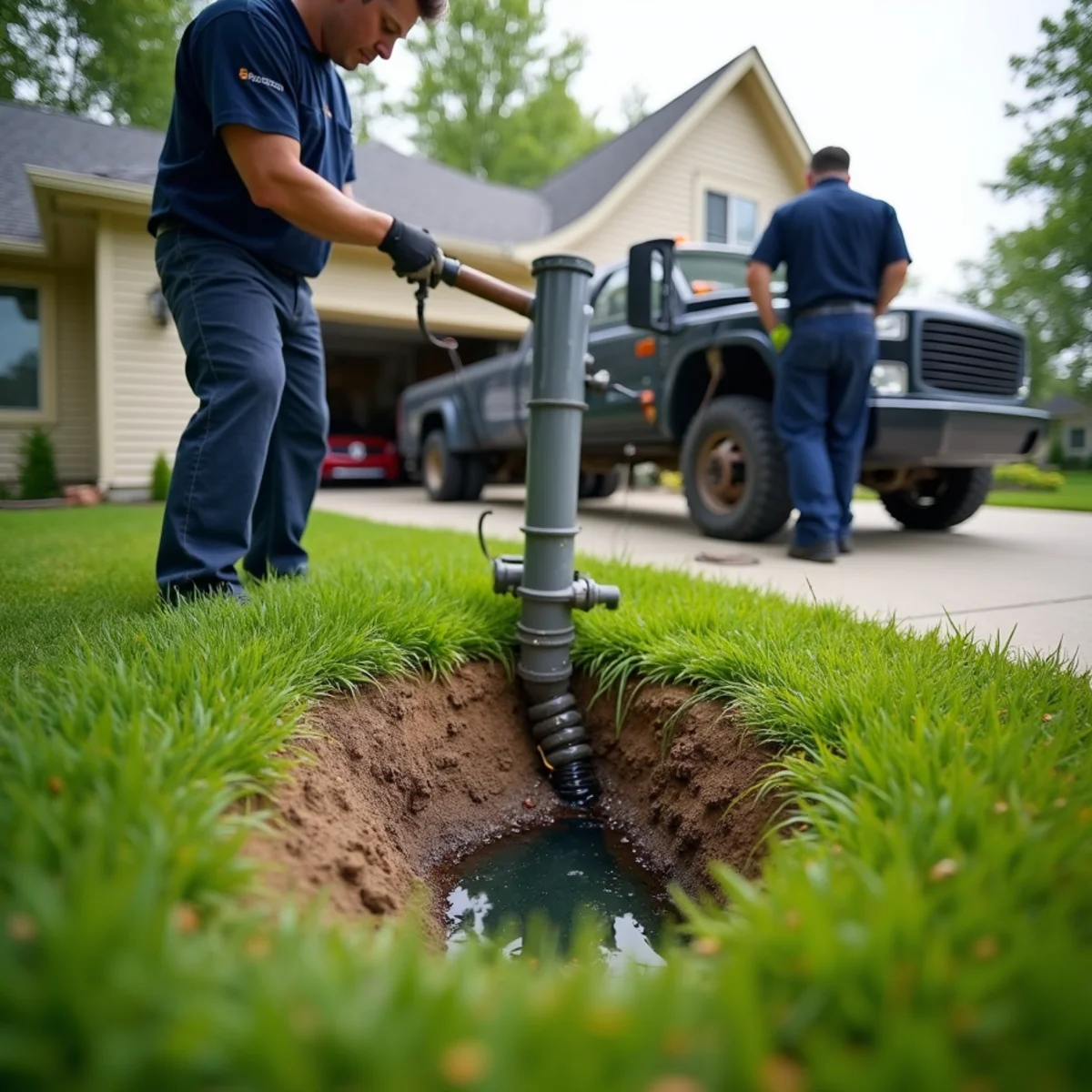
The reason people dread sewer replacement is not really the pipe. It is the trench — a four-foot-deep scar across the front lawn, through the driveway, past the maple that took forty years to get that size.
Need this handled today? Call and a real person answers — nights, weekends and holidays included. You get the price before we start.
Trenchless methods remove most of that. A cured-in-place liner turns a failing pipe into a new seamless pipe inside the old one, installed through two small access pits. Pipe bursting pulls a new pipe through the old alignment while a bursting head fractures the original outward into the surrounding soil. Neither requires opening the length of the run.
It is not free, and it is not right for every line. Per foot it costs more than an open cut. Once you count restoring a driveway, a patio and mature landscaping, it is frequently the cheaper job overall — and on some properties it is the only realistic option.
Candidacy comes off the camera footage, not off a preference. Here is what makes a line a good candidate.
A driveway, a patio, a paver walk, mature trees, or a finished landscape. Restoration is often the largest line item in an open-cut job, and trenchless avoids most of it.
Excavation cost climbs with depth, and shoring requirements come into play. Two access pits do not care how long the run between them is.
A liner seals the entire run at once. If the camera shows root intrusion at three separate joints, spot-repairing each is not the cheaper path.
Lining needs a host pipe that still holds its shape. A partially collapsed section can sometimes be handled with bursting instead.
This is the big disqualifier. A liner follows the existing grade, so it preserves a belly rather than fixing it. A low spot has to be excavated and re-sloped.
Typically one near the foundation and one near the municipal tap. Tight urban lots occasionally make this awkward.
Most residential jobs are one to two days on site, with water service normal throughout and drain use paused only briefly.
Full inspection with locating and depth. We map every defect, confirm slope, and decide whether the line is a liner candidate, a bursting candidate, or neither.
The old pipe has to be scoured back to bare wall before a liner will bond. That means cutting roots and jetting scale until the camera shows clean pipe.
Sewer work is permitted through the Village and we pull it. Public utility locates are marked before any digging, including the access pits.
Typically two, sized to the equipment rather than to the run. This is the entire extent of excavation on most jobs.
For lining, a resin-saturated liner is inverted or pulled into place and cured in position, forming a new jointless pipe. For bursting, the head is winched through, fracturing the old pipe outward while the new one follows behind.
Any branch connections are reopened, we re-camera the finished line so you can see what you bought, then backfill and restore the pits.
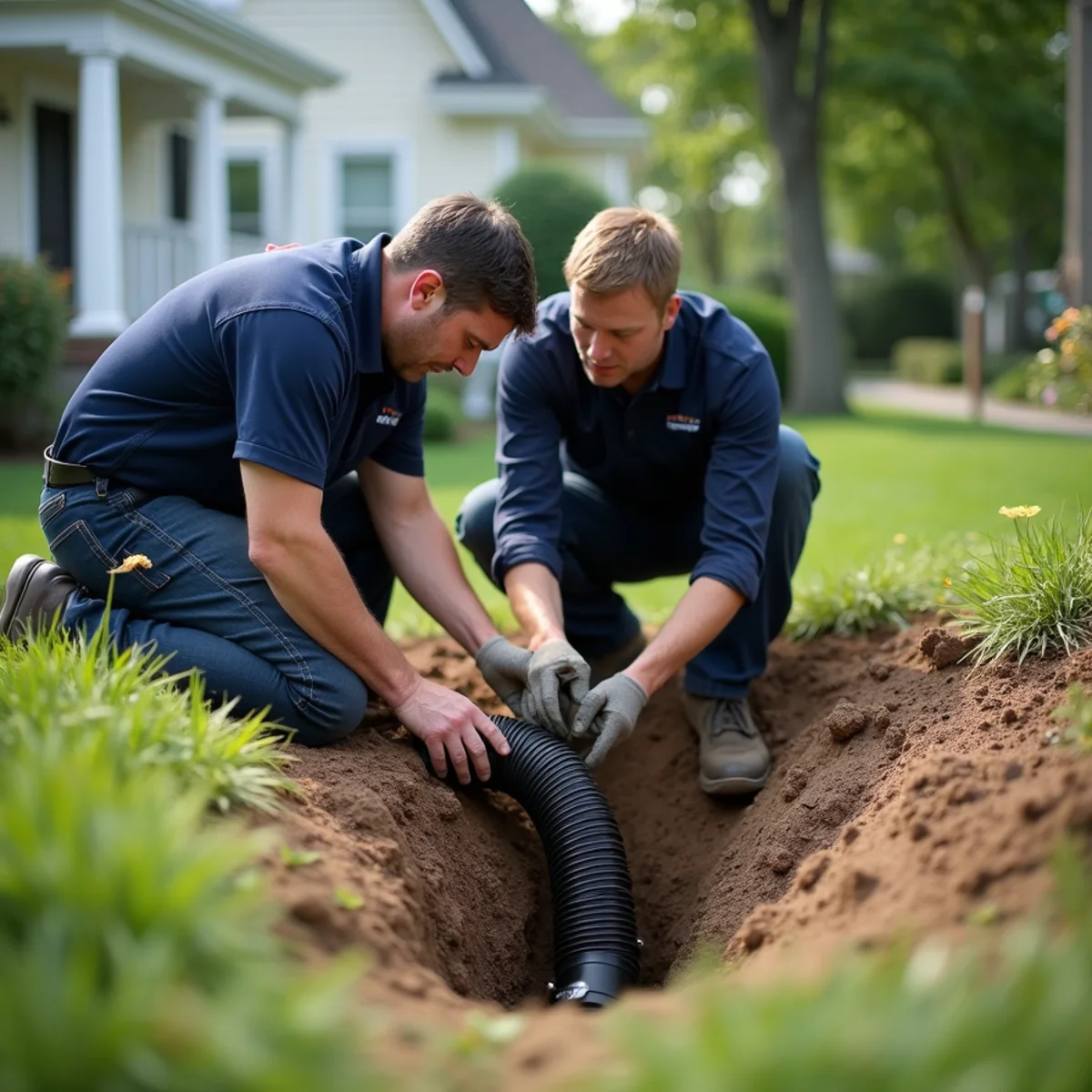
Cured-in-place pipe lining installs a resin-saturated felt or fibreglass liner inside the existing pipe and cures it in position. The result is a jointless pipe within a pipe, slightly smaller in diameter than the original but usually with better flow because the interior is smooth. It seals every joint on the run at once, which is what makes it so effective against root intrusion.
Pipe bursting pulls a bursting head through the old line, fracturing it outward into the surrounding soil while towing the new pipe in behind. It handles pipe that is too deteriorated to line, and it allows upsizing the diameter — useful when the original lateral was undersized.
Both need the same prerequisites: sound slope, adequate access, and a full camera survey first. And neither is a way to avoid a permit — this is permitted, inspected work either way.
The soil here is heavy glacial clay. It expands when wet and contracts when dry, and that seasonal movement has been working on buried pipe joints for decades.
Older laterals in this area were commonly built from short clay tile sections joined every few feet. Every joint is a potential opening, and once a hairline gap forms, roots find the moisture escaping through it. That is why root intrusion at multiple joints is so common locally — and multiple compromised joints is precisely the case where a full-run liner outperforms a series of spot repairs.
It is also why we always check slope before recommending lining. Clay that has moved enough to open joints has sometimes moved enough to create a belly, and that changes the answer entirely. The camera inspection settles it.
Per foot it is more than open cut. All-in, it frequently is not. These are the variables.
We will tell you when your line is not a trenchless candidate. Selling a liner into a bellied pipe means spending more to keep the same problem.
Yes, where the line qualifies. It needs sound slope, a host pipe that has not fully collapsed, and room for access pits. We assess candidacy from camera footage rather than deciding before we look.
Most residential laterals are a one to two day job on site, including prep cleaning and curing. Compare that with an open cut plus driveway or landscape restoration, which can run considerably longer.
Slightly, yes. In practice flow usually improves rather than declines, because the new interior is smooth and jointless where the old pipe was rough, scaled and stepped at every joint.
No — and this is the single most important limitation to understand. A liner follows the existing grade, so a low spot holding standing water stays exactly as low as it was. Bellies have to be excavated and re-sloped.
Manufacturers rate these systems for a service life measured in decades, comparable to a new pipe. It is a genuine replacement rather than a patch, which is why the up-front cost is what it is.
Often needed together
These come up on the same houses more often than not.
Spot repairs, section replacement and full laterals — quoted from camera footage you watch with us, never from a guess.
Learn moreA recorded look inside your lateral, watched on the monitor with you — the only honest basis for a sewer repair quote.
Learn moreBackwater valves, flood control systems and overhead sewer conversions — the permanent answer to a basement that backs up.
Learn moreWorth reading first
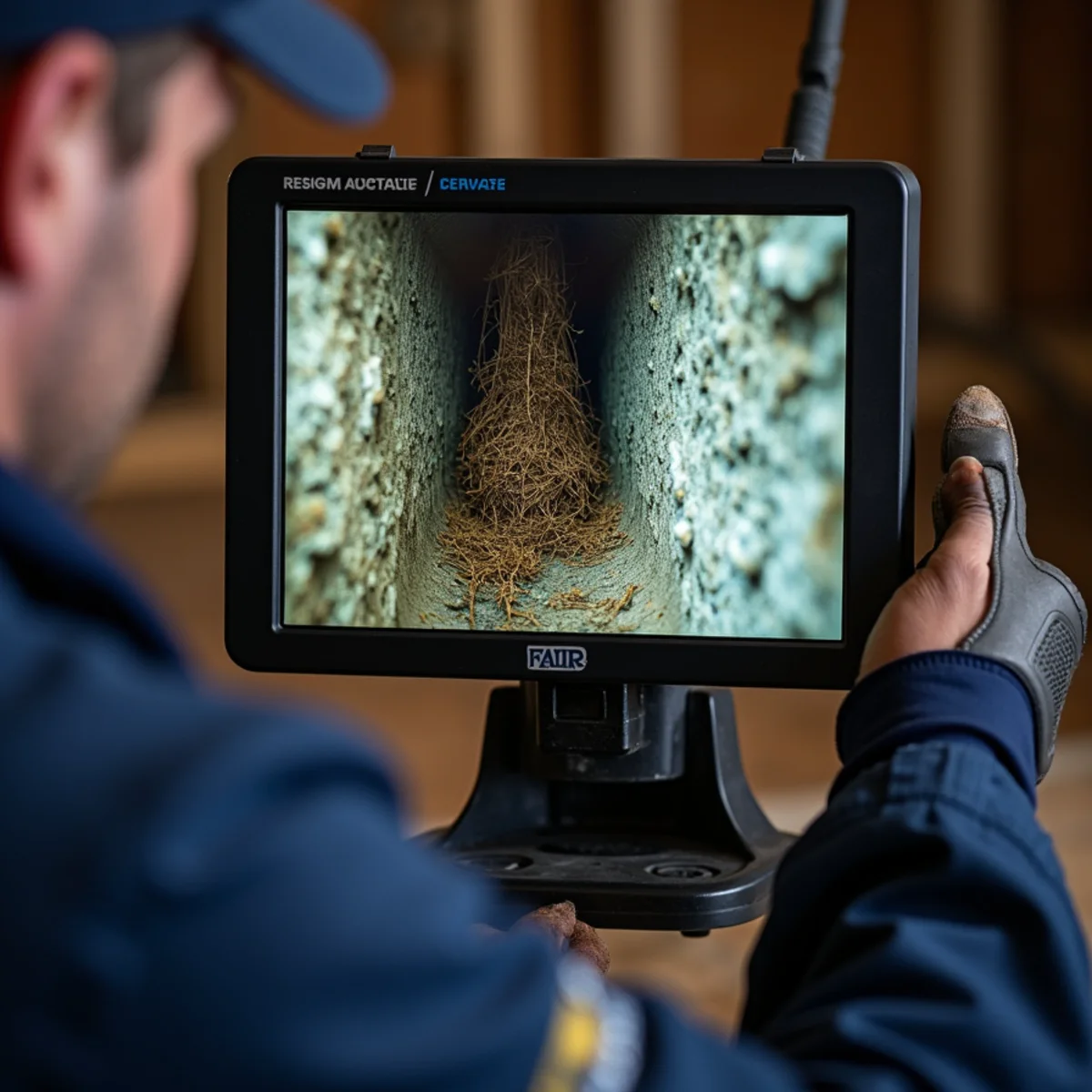
Roots do not attack sound pipe. They find a joint that is already leaking — which is why cutting them out is a treatment, not a cure.
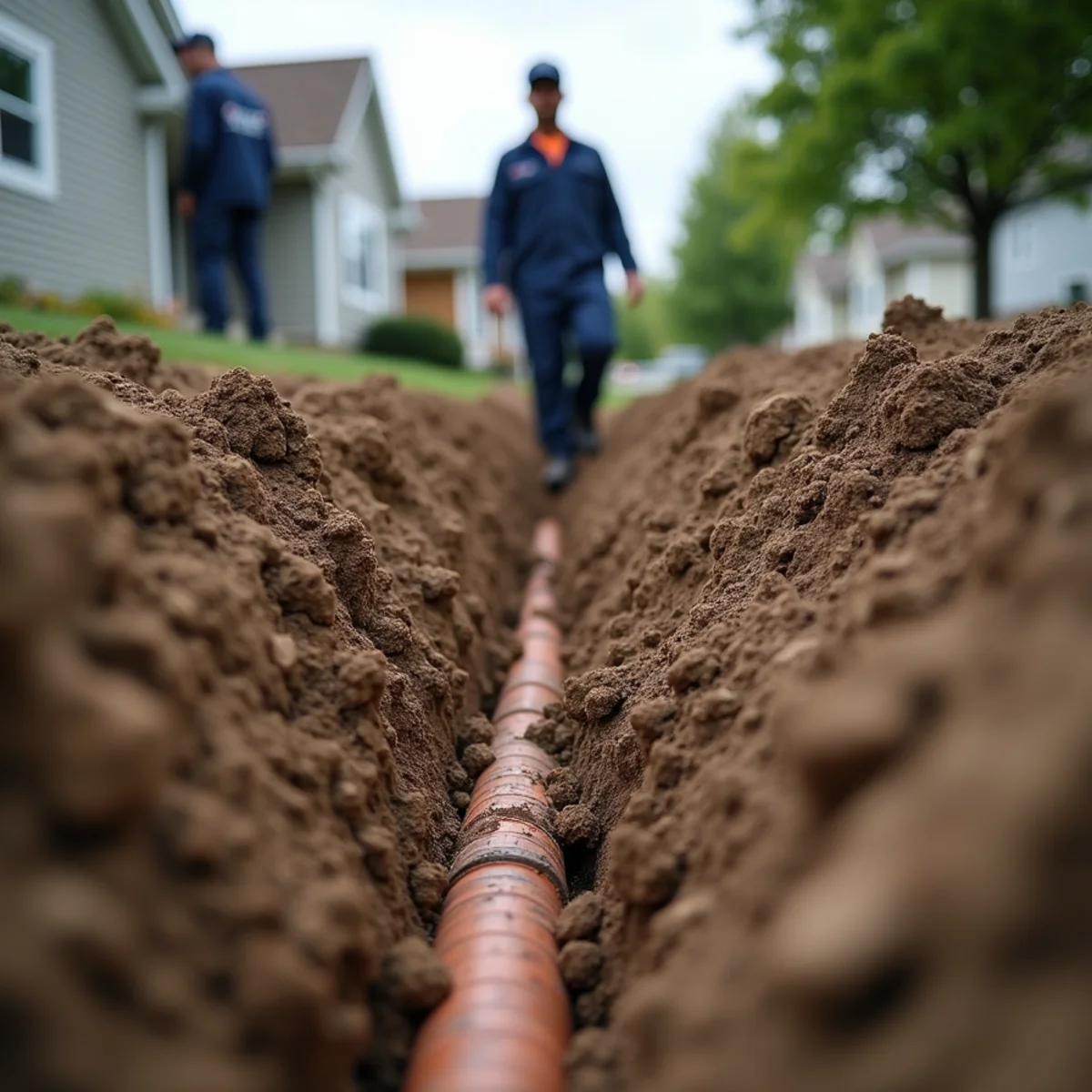
Clay expands when wet and contracts when dry. Do that for sixty years under a jointed pipe and you get the three failures we find most often.
Trenchless Sewer Repair
Call and talk to the person who will do the work. Free written estimates on non-emergency trenchless sewer repair, and a price before we start on anything urgent.
Tell us what is going on and we will get back to you with a straight answer. No obligation, no pressure.
5.0 from 11 Google reviewsLicensed & insuredFree written estimates
Our online form is not taking submissions just yet.
Please call (207) 419-2600 instead — a real person answers, nights and weekends included, and we can usually sort it faster on the phone anyway.
We are a licensed, insured, owner-operated shop based on Pine Street in Lake in the Hills. That means the person quoting the job is the person doing it, and nobody here is measured on how much they sold you.
Every recommendation starts with the water. At 26–28 grains per gallon, our supply is roughly six times harder than the national average, and it is the single biggest factor in how long anything in your plumbing lasts. Fixing the symptom without addressing that is how you end up calling someone again in two years.
And when a permit is required — water heaters, sewer work, gas piping — we pull it and show the fee on its own line. Ask every plumber you talk to for the same. Read more in our guide to plumbing permits in McHenry County.