Basement & Sump
Why Heavy Rain Floods Basements in Lake in the Hills
It is not bad luck and it is not one unusually big storm. Basement flooding here follows a predictable annual pattern, which means it can be planned for.
Every April, the same conversation happens across Lake in the Hills, Algonquin and Huntley. A homeowner with a dry basement for six years suddenly has an inch of water, and everyone tells them it was an unusually heavy storm.
It usually was not. What happened is a sequence, and once you understand the sequence, you can get ahead of it.
The clay soil problem
McHenry County sits on heavy glacial clay. Clay does not drain — it holds water. That is why the farmland around here is productive and why the basements are not.
In sandy soil, rain percolates down and away. In clay, it saturates the top layer and then stops. The water has to go somewhere, so it moves laterally along the path of least resistance — which, around a house, is the backfilled trench next to the foundation. That backfill is looser than the undisturbed clay around it, so it acts like a bathtub around your basement walls.
That is the mechanism that makes drain tile and a sump pit necessary rather than optional in this county.
The spring thaw multiplier
March is worse than any single summer storm, and here is why.
The top few inches of soil thaw first while the layer beneath stays frozen solid. Snowmelt cannot go down through the frozen layer, so it runs sideways along it — straight into that loose backfill trench and down to your drain tile.
Meanwhile the ground is already saturated from the previous thaw cycle. So the drain tile system, which was designed for rain falling on soil that can absorb some of it, is receiving nearly all of the meltwater from the surrounding area.
Then a spring storm parks over McHenry County and adds two inches of rain on top of that. Every pit in the subdivision runs continuously for days.
Why the pump fails at exactly that moment
It is not coincidence. Three things converge.
First, the pump has already run for seventy-two hours straight. A pump rated for intermittent duty is doing continuous duty, and the motor is hot.
Second, the same storm system that dropped the rain frequently knocks out power. A pump on household current with no backup stops at exactly the moment the pit is filling fastest.
Third, most residential pumps are seven to ten years old by the time this happens, because most homeowners replace them only after a failure. A tired pump plus continuous duty plus a power flicker is not bad luck. It is a predictable annual event.
What actually prevents it
- A pump sized to real inflow, not horsepower on a box. We measure how fast your pit refills under load and size in gallons per hour against your discharge head height.
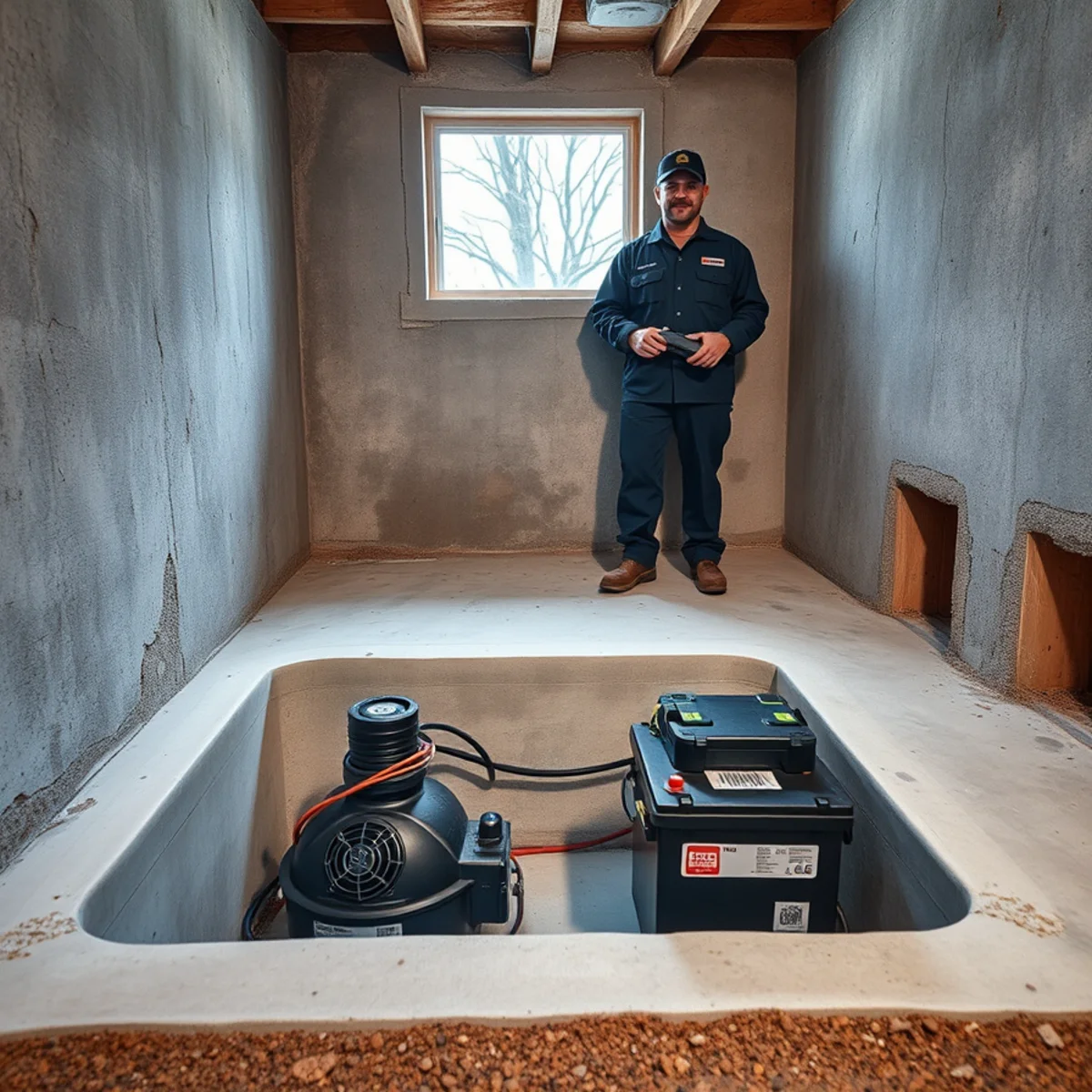
- A battery backup with its own pump and charger, sized for a realistic outage rather than a best-case number. In a finished basement this is not optional.
- A working check valve. A failed one lets discharged water flow straight back into the pit, so the pump re-pumps the same gallons and wears out doing nothing.
- Discharge routed far enough from the foundation that the water actually leaves. Dumping three feet from the wall on saturated clay is recirculation, not drainage.
- Downspouts extended at least six feet from the foundation. Roof water is a huge volume, and sending it into the same saturated backfill is self-defeating.
- A WiFi flood sensor in the pit. It tells you the pump has stopped while you are at work, which is the difference between a wet vac and a claim.
Test it in March and October
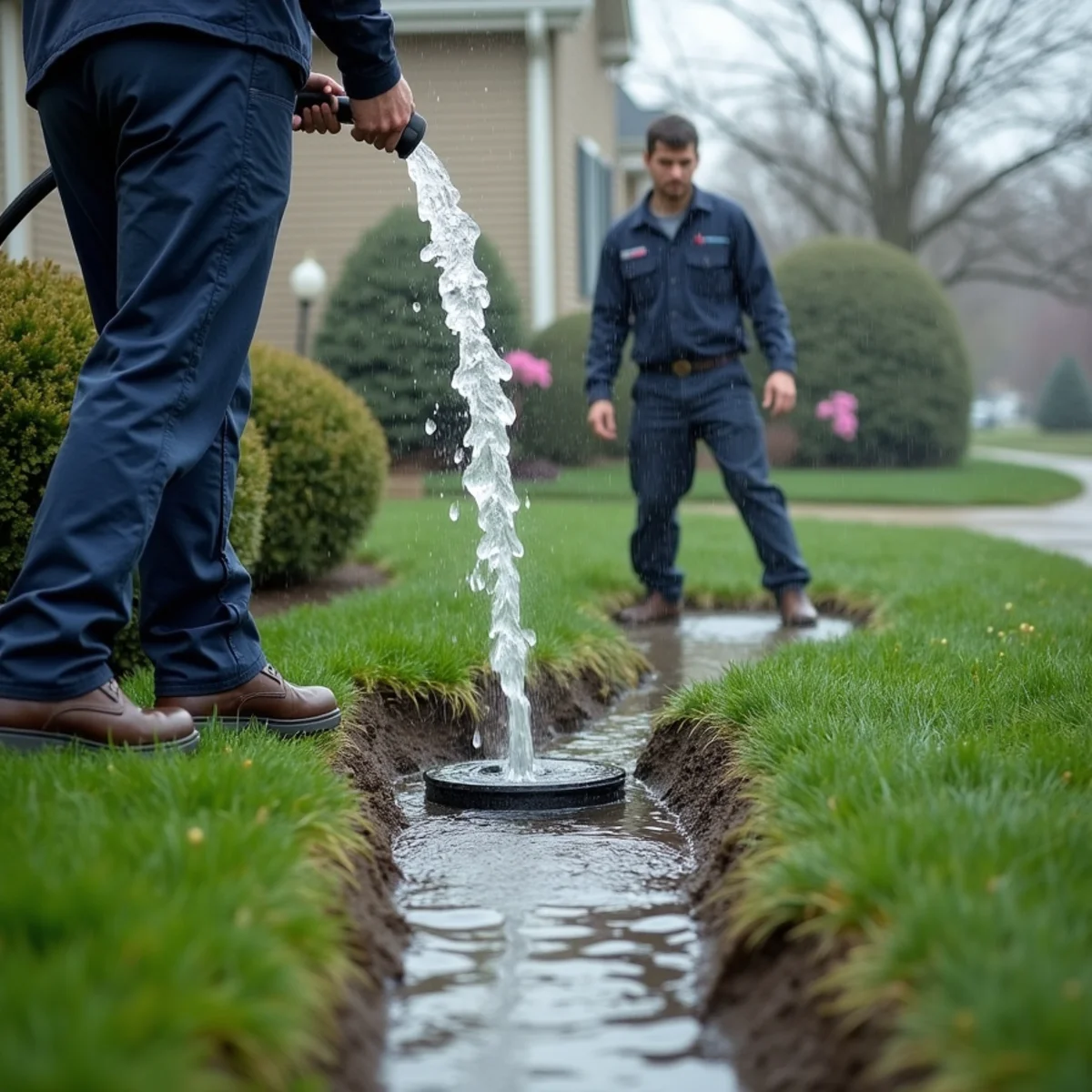
Pour five gallons of water into the pit and watch. The pump should start within about ten seconds, move the water briskly, and shut off cleanly without immediately restarting.
If it hesitates, hums before it starts, sounds labored, or short-cycles, get it looked at before spring. A pump that struggles on a bucket will not survive four days of snowmelt.
While you are down there, check that the float swings freely without touching the pit wall or the discharge pipe, look for the orange sludge of iron bacteria (common in McHenry County groundwater, and a leading cause of pumps that look fine and do nothing), and go outside to confirm the discharge is not buried, frozen or aimed back at the house.
And if you have a battery backup, unplug the primary and confirm the backup actually takes over. A backup nobody has tested is decoration.
Where it is worst locally
Homes on the low side of a grade collect groundwater from everything uphill — a real factor in Algonquin on the slopes toward the Fox River, in Fox River Grove on the bluff, and in Sleepy Hollow on the rolling wooded lots.
Near-lake properties in Island Lake and Wauconda have elevated water tables year-round, so their pumps never get an off-season.
And riverfront homes in Port Barrington see groundwater rise directly with the Fox River, where the failure mode is often volume rather than power — which argues for a second primary pump rather than only a battery.
Our sump pump installation and battery backup page covers how we size systems for each of those situations.
Quick answers
Why does my basement flood even though I have a sump pump?
Usually one of four things: the pump is undersized for actual inflow, the check valve has failed so it re-pumps the same water, the discharge dumps too close to the foundation, or the pump quit during a storm power outage. All four are fixable.
How often should I test my sump pump?
Twice a year — March before the thaw and October before the ground freezes. Pour five gallons into the pit and confirm the pump starts within about ten seconds and shuts off cleanly.
Do downspouts really matter for basement flooding?
Enormously. A roof sheds a very large volume of water, and dumping it next to the foundation sends it straight into the loose backfill your drain tile has to handle. Extending downspouts at least six feet from the house is one of the cheapest improvements available.
Need a hand with this?
Talk to the plumber who wrote this
We are a licensed, owner-operated shop on Pine Street in Lake in the Hills. Free written estimates on non-emergency work, and a real person answering the phone when it cannot wait.
- 5.0 from 11 Google reviews
- Licensed & insured
- 24/7 emergency service