Water Softener Installation & Repair
Whole-home softeners sized for real 26–28 grain water — plus repairs, resin service and salt guidance for the system you already own.
Learn more
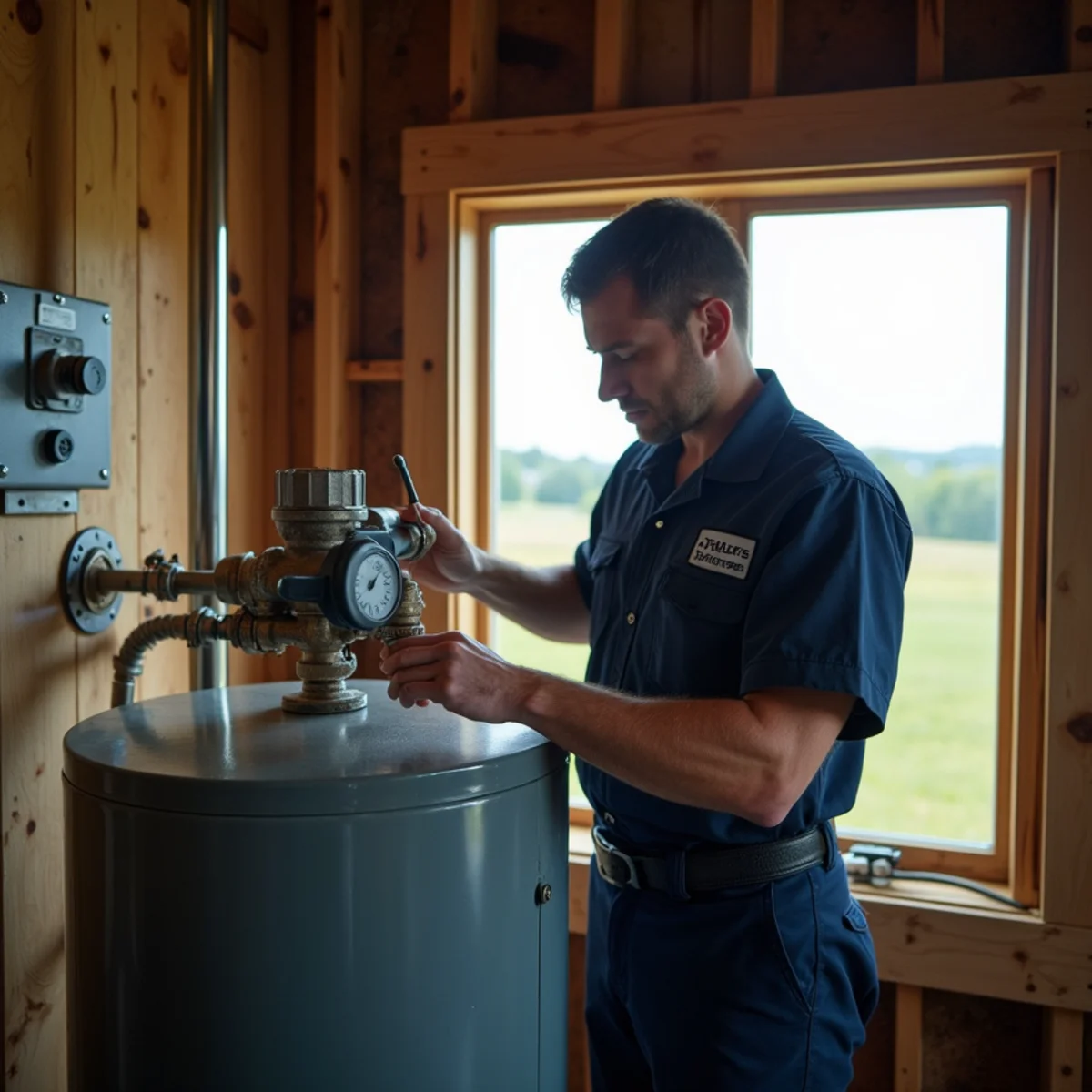
Artisan Water Group
Outside village limits, there is no water utility to call. The well, the pump, the pressure tank and the treatment are all yours, and when something fails you do not get low pressure — you get no water at all.
Need this handled today? Call and a real person answers — nights, weekends and holidays included. You get the price before we start.
We work on private well systems throughout the rural parts of our service area: Bull Valley, Prairie Grove, Barrington Hills, the acreage around Marengo and Woodstock, and the pockets of unincorporated property scattered between the villages.
The single most valuable thing we bring is early diagnosis. Well systems almost always warn you before they fail outright, and the warning — a pump cycling more than it used to — points at a cheap component that is destroying an expensive one.
These warnings are easy to ignore and expensive to ignore for long.
Short-cycling, and the most important item on this list. It nearly always means the pressure tank's bladder has failed. The tank is the inexpensive part; the pump it is destroying is not.
A pressure tank that has lost its air charge, a failing pressure switch, or a pump no longer delivering what it used to.
Air entering the system, a dropping water level in the well, or a failing check valve. Worth diagnosing rather than waiting out.
A leak on the property, a pressure switch that has failed closed, or a pump that can no longer reach cut-out pressure. All three want attention today.
A failing well screen, a dropping water level pulling from lower in the formation, or a collapsing casing. Diagnosis here can involve a well contractor as well as a plumber.
Iron or sulfur in the water. Both are treatable, and both need addressing in the correct sequence relative to any softener.
We work the accessible side — tank, switch, wiring at the control, plumbing and treatment. Work down the well itself involves a licensed well contractor and we coordinate rather than improvise.
Gauge on the system, watch a full cycle. Cut-in and cut-out pressures, how long the pump runs, how long it rests. That pattern identifies most problems before anything is opened.
Check the air charge against cut-in pressure with the system drained. A tank that will not hold its charge has a failed bladder and is the cause of most short-cycling.
Pressure switch contacts, settings and the control box. These are inexpensive parts that cause expensive symptoms.
On a well there is no water bill to warn you, so a buried service line leak shows up as pump behaviour. We isolate sections and locate acoustically before anyone digs.
Hardness, iron, pH and total dissolved solids at the tap. Iron gets removed ahead of any softener — get that order wrong and the resin fouls within a couple of years.
If the diagnosis points to the submersible pump, the drop pipe or the well itself, we say so and work alongside a licensed well contractor rather than pretending otherwise.
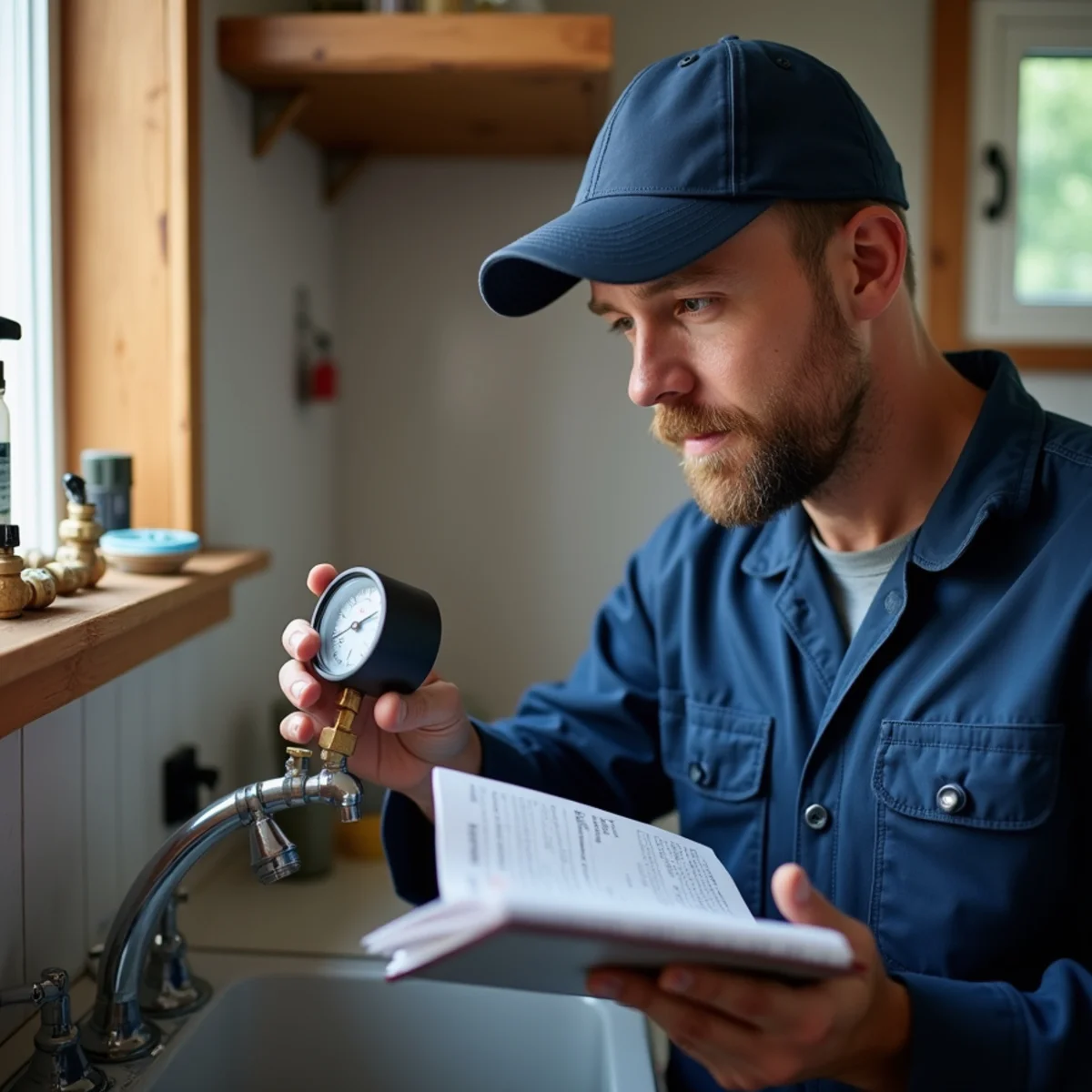
If you take one thing from this page, take this. A well pump that switches on and off rapidly while a tap is running is destroying itself, and the cause is almost always a cheap part.
A pressure tank contains a bladder separating an air charge from the water. That cushion is what lets the pump run for a reasonable stretch and then rest. When the bladder fails, there is no cushion — pressure hits cut-out almost immediately, the pump stops, pressure collapses as soon as water is drawn, and it starts again. Cycles that should happen a few times an hour happen a few times a minute.
Pumps are rated in starts, not in running hours. A submersible motor that would give fifteen years of normal cycling can burn out in a season of short-cycling. Replacing a failed pressure tank is a manageable expense. Replacing the pump it destroyed, pulled from a few hundred feet of well, is not. If your pump is cycling rapidly, call before it becomes the expensive version.
Well water in this part of Illinois is typically hard and frequently carries iron. Sequence matters more than equipment brand, and getting it backward is the most common and most expensive well treatment mistake we see.
Iron has to be removed before the softener, not by it. A softener will strip a small amount of iron and foul its resin doing so — capacity collapses, soft water quietly stops being soft, and the homeowner concludes the equipment was bad. It was not; it was fed the wrong water. Correct order is iron removal, then softening, then point-of-use filtration for drinking.
Some wells here also carry sulfur, which produces the rotten-egg smell people understandably mistake for a gas leak. It is unpleasant rather than dangerous and it is treatable, but it needs identifying correctly. And one important caveat: if the smell is in the air rather than in the water, treat it as a gas leak, get out of the house, and call 911 and the utility from outside. Our water softener installation page covers sizing once the test results are in.
The spread is wide because a pressure switch and a pump replacement are not remotely the same job.
If the diagnosis points down the well rather than at the equipment in your utility room, we will tell you that plainly and help you get the right contractor.
Almost always a failed pressure tank bladder. It is the single most important well symptom to act on, because rapid cycling destroys pumps and the tank causing it is comparatively inexpensive to replace.
Commonly eight to fifteen years. They fail gradually as the bladder loses integrity, so the first sign is usually the pump cycling more often rather than anything dramatic.
We diagnose the whole system and handle everything on the accessible side — tank, switch, controls, plumbing and treatment. Pulling a pump from the well itself is work for a licensed well contractor, and we coordinate with one rather than pretending it is our specialty.
Testing is the only way — there is no published report for a private well. We test hardness, iron, pH and total dissolved solids at your tap and design treatment from those numbers rather than a regional average.
The breaker for the pump, and the pressure switch contacts if you are comfortable looking. If the breaker has tripped, do not simply keep resetting it — that usually means the pump is drawing too much current, and repeated resets finish it off. Call.
Often needed together
These come up on the same houses more often than not.
Whole-home softeners sized for real 26–28 grain water — plus repairs, resin service and salt guidance for the system you already own.
Learn moreUnder-sink reverse osmosis and whole-home carbon filtration for water that tastes right and protects your ice maker and coffee maker.
Learn moreFind the hidden leak before you open the wall — acoustic, thermal and pressure diagnostics, then a proper repair.
Learn moreWorth reading first
One protects your plumbing. The other improves what you drink. Confusing them is the most expensive mistake in home water treatment.

Short answer: yes, and it is not close. At 26 to 28 grains per gallon, our water is roughly six times harder than the national average. Here is what that actually does to your house.
Well Pump Services
Call and talk to the person who will do the work. Free written estimates on non-emergency well pump services, and a price before we start on anything urgent.
Tell us what is going on and we will get back to you with a straight answer. No obligation, no pressure.
5.0 from 11 Google reviewsLicensed & insuredFree written estimates
Our online form is not taking submissions just yet.
Please call (207) 419-2600 instead — a real person answers, nights and weekends included, and we can usually sort it faster on the phone anyway.
We are a licensed, insured, owner-operated shop based on Pine Street in Lake in the Hills. That means the person quoting the job is the person doing it, and nobody here is measured on how much they sold you.
Every recommendation starts with the water. At 26–28 grains per gallon, our supply is roughly six times harder than the national average, and it is the single biggest factor in how long anything in your plumbing lasts. Fixing the symptom without addressing that is how you end up calling someone again in two years.
And when a permit is required — water heaters, sewer work, gas piping — we pull it and show the fee on its own line. Ask every plumber you talk to for the same. Read more in our guide to plumbing permits in McHenry County.