Drains & Sewer
Tree Roots in Your Sewer Line: A Crystal Lake Guide
Roots do not attack sound pipe. They find a joint that is already leaking — which is why cutting them out is a treatment, not a cure.
In the older neighborhoods of Crystal Lake, Cary and Woodstock, this is the single most common cause of recurring sewer backups. It is also the most misunderstood.
Homeowners are told 'you have roots' and assume the tree is the problem. The tree is opportunistic. The problem is the joint the roots found.
Why roots get in
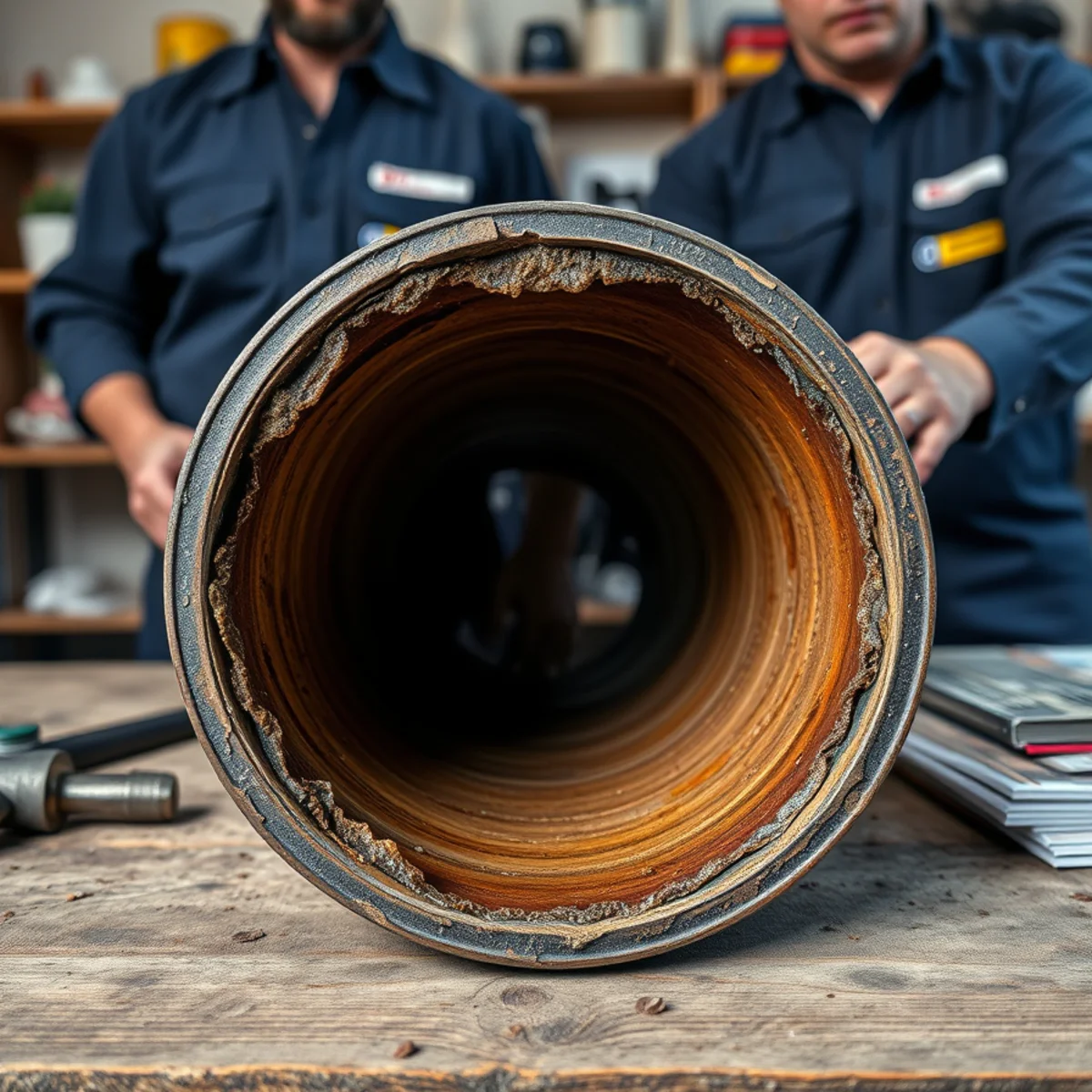
Older sewer laterals in this area were commonly built from short sections of clay tile, joined every few feet. Every joint is a potential opening.
Clay soil is the accomplice. McHenry County clay expands when wet and contracts when dry, and that seasonal movement works on those joints year after year. Eventually a hairline gap opens.
Warm, moist, nutrient-rich vapor escapes through that gap into the surrounding soil. Roots grow toward exactly that signal. They enter as filaments finer than a hair, then thicken inside the pipe where conditions are ideal, forming a mat across the flow.
Sound, sealed modern PVC does not get root intrusion. It is old jointed pipe with an existing defect that does.
How to know it is roots
The pattern is distinctive once you know it.
- Backups recur on a roughly annual or biennial cycle rather than randomly.
- They tend to be worse in spring, when root growth accelerates.
- The home has mature trees near the line — silver maples, willows and older parkway trees are the usual suspects.
- The house predates the switch to sealed modern pipe, so the lateral is clay tile or older cast iron.
- Cabling clears it completely and it works perfectly afterward — for a while.
Confirm with a camera, not a guess
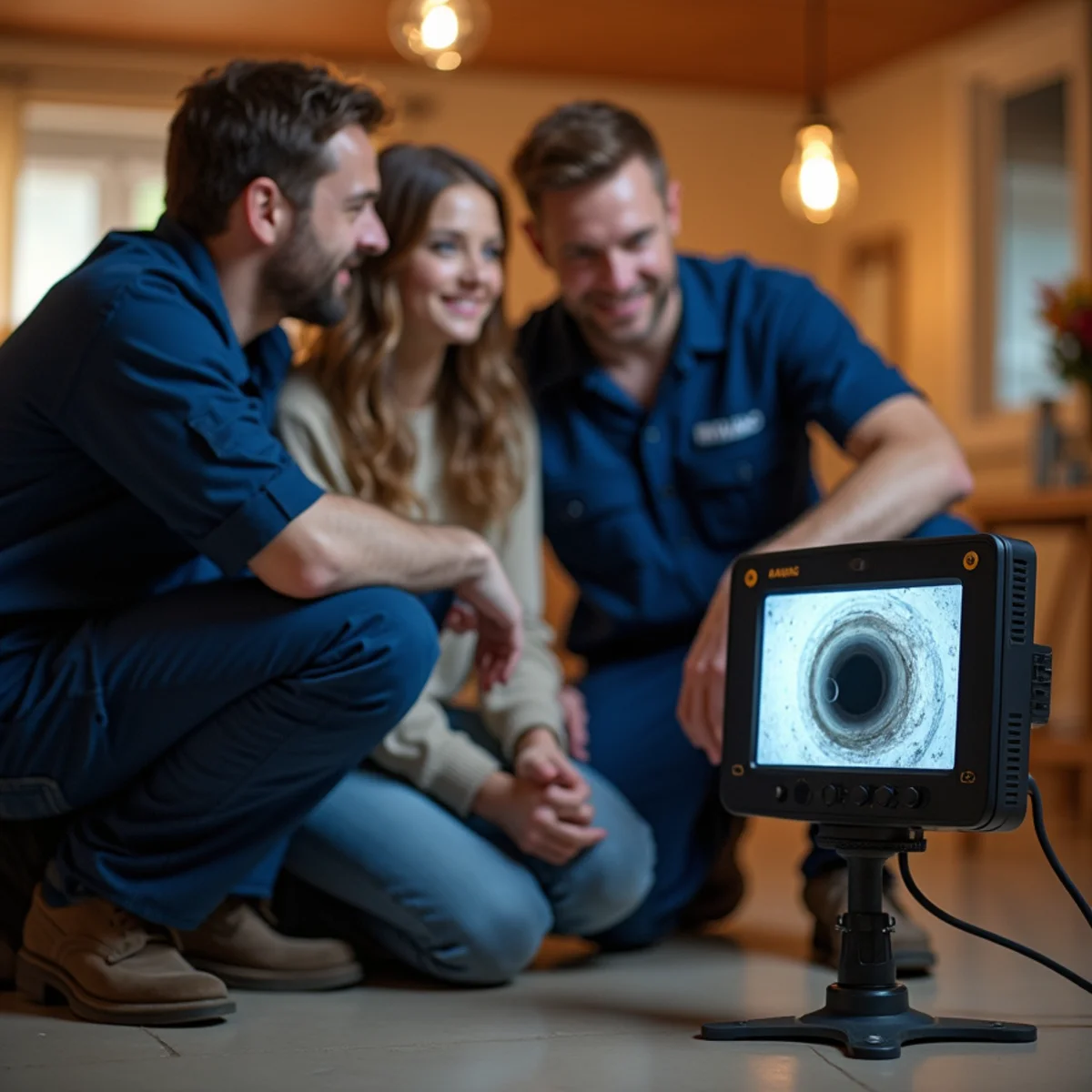
A sewer camera settles it in about ten minutes. We clear enough of the line to see, then run a self-leveling camera from the cleanout to the municipal tap, recording the whole way.
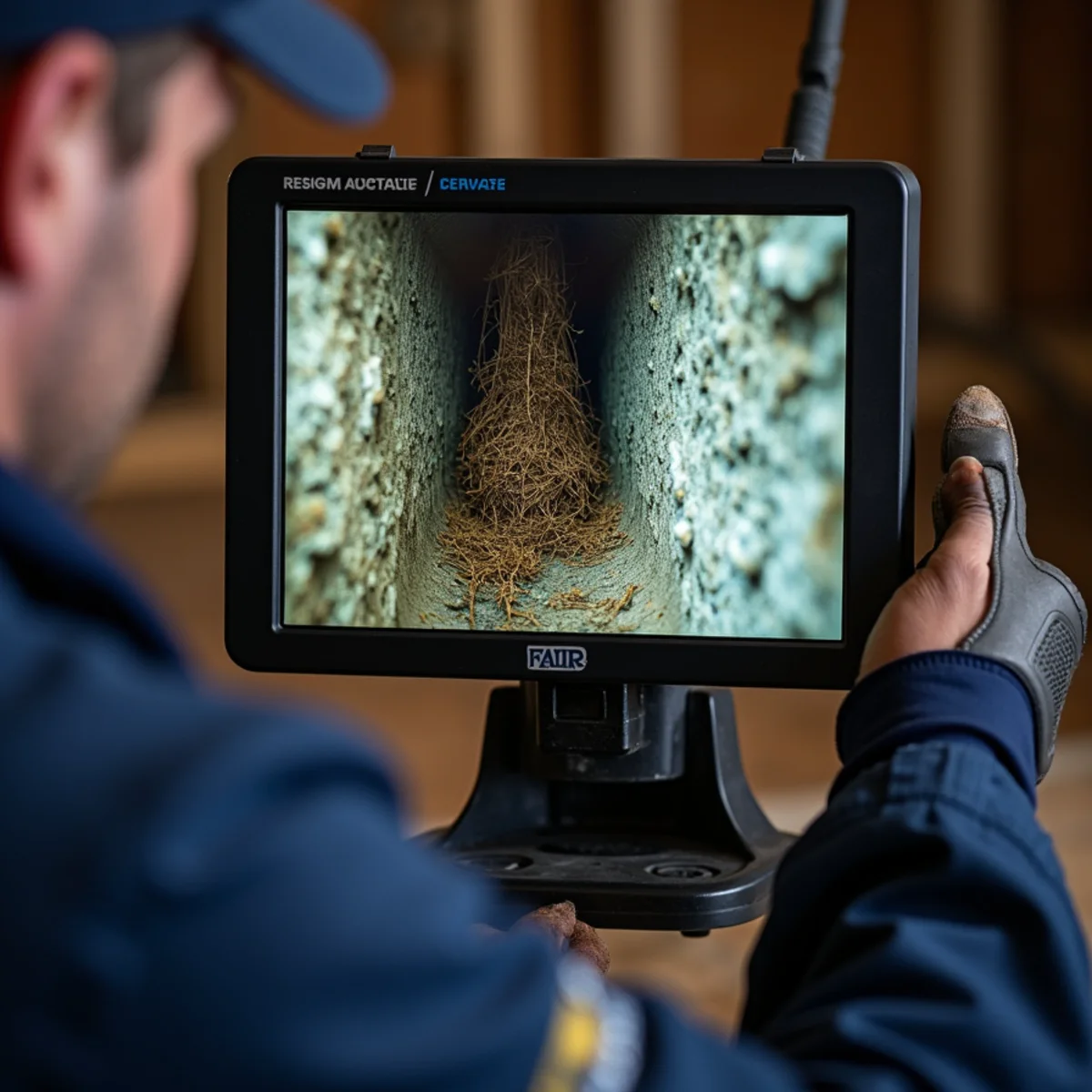
You watch the screen with us. Roots look like a curtain or a ball of fibers at a specific point. A belly looks like standing water in an otherwise sound run. A crack, an offset joint and mineral scale each look completely different.
A transmitting sonde in the camera head lets us mark the location and depth on the surface, so a repair conversation becomes 'eleven feet out from the foundation, six feet down' rather than 'somewhere in the front yard.'
This matters because sewer work is the easiest place in plumbing to be sold something you do not need. Footage makes the pipe do the arguing.
Your actual options
Mechanical cutting and jetting. A root cutter removes the mass and jetting flushes the debris. This is the right first step and it restores full flow. What it does not do is close the opening, so plan on repeating it every one to two years.
Root treatment products. Foaming herbicides applied through the line kill roots in contact with the pipe and slow regrowth. They help. They do not seal the joint, and they are not a substitute for knowing the pipe's condition.
Spot repair. Excavate at the marked location and replace that section with sealed pipe. When intrusion is at one identifiable joint and depth is reasonable, this is often the best value — permanent fix, contained excavation.
Cured-in-place liner. A resin-saturated liner is inserted and cured, creating a seamless new pipe inside the old one. Two small access pits instead of a trench across the yard. Excellent when the run has multiple compromised joints, and it seals them all. It follows existing slope, so it will not correct a belly.
Full replacement. When the line has multiple failures, a collapse, or severe slope problems. Open cut or pipe bursting depending on the run, soil and what sits on top of it.
The honest math
Homeowners often ask whether they can just have it cleaned every year forever. Sometimes the answer is genuinely yes — a structurally sound line with minor intrusion at one joint can be maintained indefinitely, and that is a legitimate choice.
The math changes when you count everything. Annual cleaning is a recurring cost with no end date. It also carries the risk of a backup between visits, and a sewage backup into a finished basement costs far more than the cleaning ever did.
Our rule of thumb: if the camera shows a single joint with minor intrusion and sound pipe elsewhere, maintenance is reasonable. If it shows multiple compromised joints, cracking, or an offset, the repair pays for itself within a few years and removes the risk entirely.
If you are buying a house
A standard home inspection does not include the sewer line. The inspector runs the water, watches it drain, and moves on.
In older Crystal Lake, Cary and Algonquin neighborhoods — anywhere with mature trees over a pre-1980 lateral — a sewer camera inspection is the highest-value inspection add-on available. It costs a small fraction of a replacement.
Find something, and you have leverage before closing. Find nothing, and you have documented footage of a sound line. Our sewer line repair and camera inspection page walks through the whole process.
Quick answers
Will removing the tree fix my sewer line?
No. The roots already inside the pipe stay, and the joint they came through is still open — the next nearby tree will find it. Removing the tree also does not repair the defect. Fix the pipe, and the tree stops mattering.
How much does it cost to remove roots from a sewer line?
Mechanical cutting and jetting is the most affordable option and is typically a recurring cost every one to two years. A spot repair or a liner costs more up front and resolves it permanently. A camera inspection first tells you which one your line actually needs.
Can chemicals kill roots in a sewer line?
Foaming root treatments kill roots in contact with the pipe and slow regrowth, which genuinely helps. They do not seal the joint the roots entered through, so they manage the symptom rather than fixing the cause.
Need a hand with this?
Talk to the plumber who wrote this
We are a licensed, owner-operated shop on Pine Street in Lake in the Hills. Free written estimates on non-emergency work, and a real person answering the phone when it cannot wait.
- 5.0 from 11 Google reviews
- Licensed & insured
- 24/7 emergency service