Emergency
What to Do When a Pipe Bursts in Your Home
A half-inch line at household pressure moves several gallons a minute. What you do in the first five minutes matters more than anything a plumber does afterward.
Read this now, not later. The entire value of this article is in being familiar with it before you need it.
A half-inch supply line at typical household pressure moves several gallons a minute. Five minutes of that is a wet-vac evening. Two hours of it, while you look for a valve you have never located and then wait for someone to arrive, is a restoration claim with drying equipment in your house for a week.
The difference is almost never the plumber. It is whether the homeowner knew where the shutoff was and whether it turned.
Step 1 — Shut off the water
Everything else is secondary. Do not photograph, do not call, do not move furniture. Close the water first.
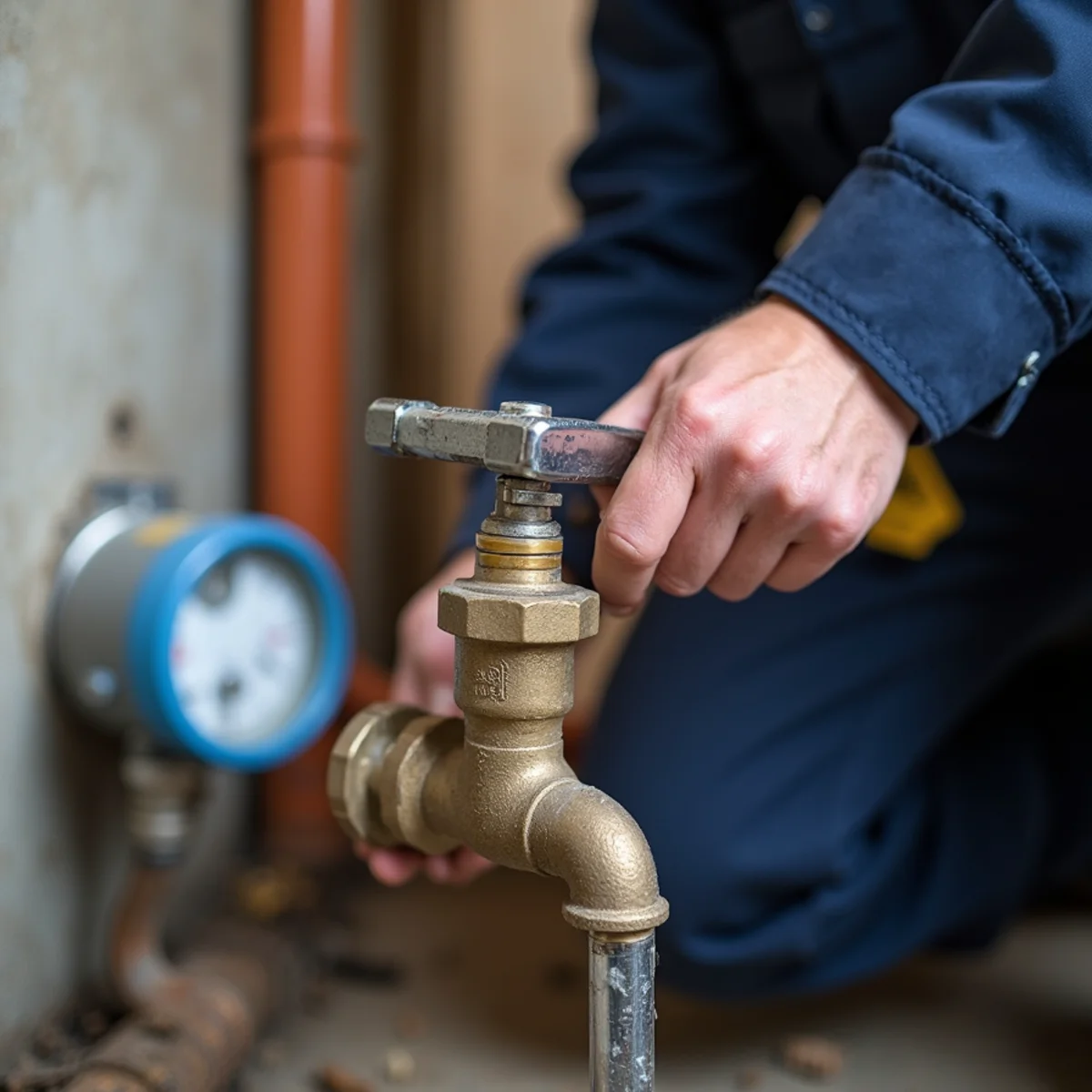
In most Lake in the Hills homes the main shutoff is inside on the front foundation wall, near where the service line enters, usually within a few feet of the water meter. A lever-style ball valve closes with a quarter turn so the handle sits across the pipe. A wheel-style gate valve closes clockwise and may need many full rotations.
If the leak is clearly at one fixture, its own stop valve may be enough — under a sink, behind a toilet, behind the washing machine. That keeps the rest of the house in water while you deal with the problem.
If the main will not turn, do not force it hard enough to snap the stem. A broken valve on a live line is dramatically worse than a stuck one. Move to containment and call the Village's water department about the curb stop.
Step 2 — Kill power if water has reached anything electrical
Water spreading toward a panel, a furnace, a sump pump receptacle or a basement outlet is a shock and fire hazard.
Turn off the affected circuits at the breaker panel — but only if you can reach the panel from a dry spot. Standing in water to operate a panel is exactly the scenario this step exists to prevent.
If you cannot reach it safely, leave it, get everyone out of that area, and tell us when you call. This is also a legitimate reason to call the fire department; they would much rather come out for this than for what it becomes.
Step 3 — Drain the pressure out of the system
With the main closed, there is still water sitting in the pipes above the break, and gravity will keep feeding it out.
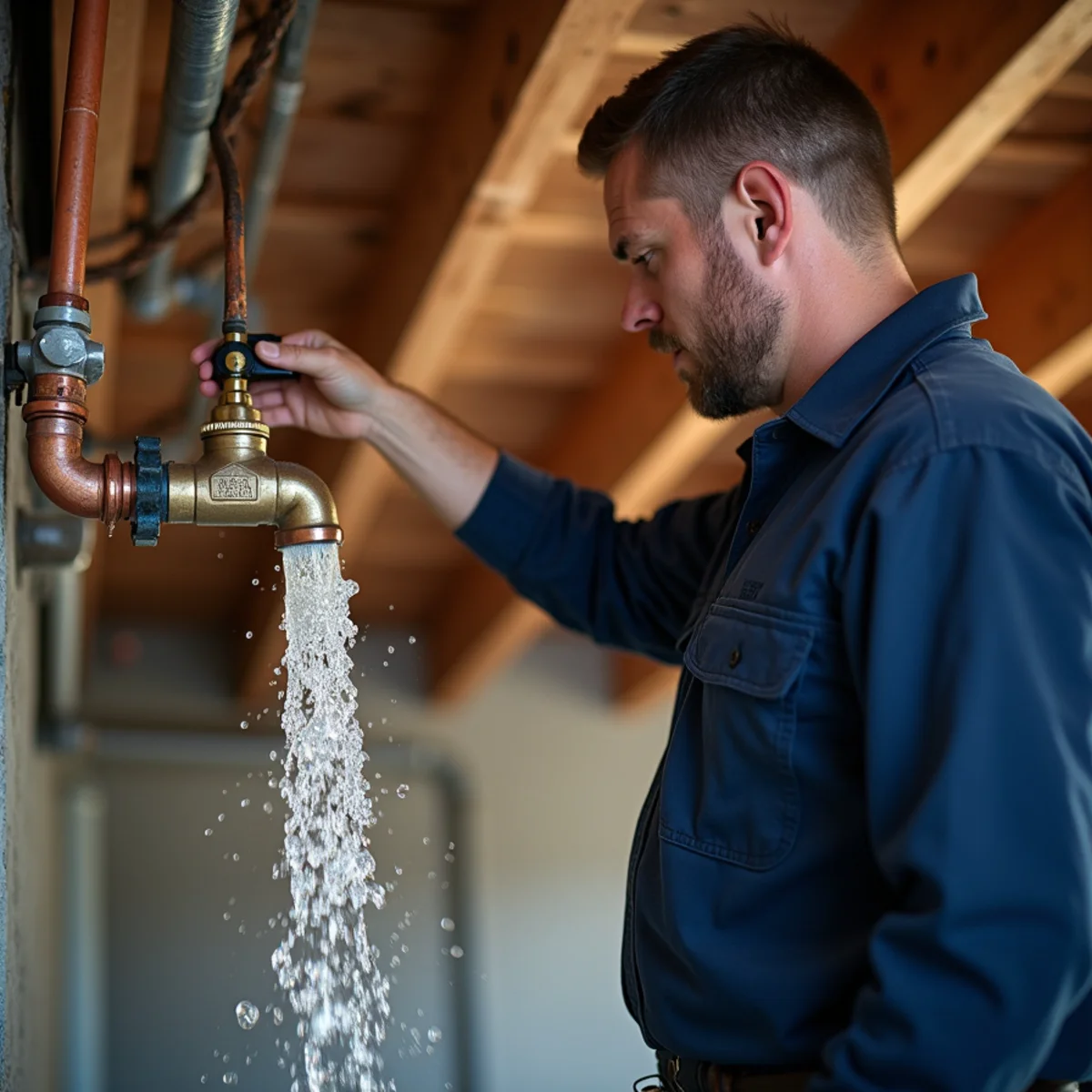
Open the lowest faucet in the house — usually a laundry tub or a basement utility sink — and let it run until it stops. That pulls the standing water down and out through a drain instead of through the hole in your ceiling.
Open a faucet on an upper floor too. It lets air in behind the draining water so the system empties faster.
Step 4 — Photograph everything before you clean
This is the step people skip and regret. Once you have mopped, the evidence is gone and you are reconstructing the scene for an adjuster from memory.
Photograph the water at its worst extent, the failed pipe itself if visible, damage to walls, ceilings, flooring and contents, and anything of value that was affected. Video walking through the space is even better than stills.
Sudden and accidental water damage is generally covered by homeowner's insurance; damage from a slow leak that went unaddressed generally is not. The distinction matters, and your photographs are the primary evidence for which one this was.
Step 5 — Get the water out and the air moving
Once the source is stopped, time works against you. Materials that are wet for twenty-four hours dry out. Materials that are wet for seventy-two start growing things.
Move anything absorbent off the floor — cardboard boxes wick water upward at a rate that surprises people. Pull up soaked area rugs. Wet-vac standing water. Get fans moving air across wet surfaces and run a dehumidifier if you have one.
For a contained leak on a hard floor, that is often the whole job. For water in carpet, drywall or insulation, or anything that ran through a ceiling, call a restoration company. Wet insulation inside a wall does not dry on its own no matter how many fans you point at the room.
Step 6 — Call, and know what to say
When you call us, the first question will be whether the water is stopped. If it is not, we will stay on the line and work through the valve with you before anything else.
Then it helps to know: roughly where the water is coming from, whether it is hot or cold side, how old the house is, and whether this has happened before. That last one matters more than it sounds — a second failure on the same run means the pipe is failing generally rather than at one point.
We will give you an ETA rather than a window, and we will tell you if we are already on another emergency instead of leaving you waiting. Our 24/7 emergency plumbing page explains how the call runs from our side.
Why it burst, and whether it will happen again
In January, the answer is almost always a freeze. Water expands about nine percent when it freezes, and the split usually opens while the line is still frozen — then reveals itself when the thaw restores pressure, often while nobody is home. That is why our worst calls come on the first warm day after a cold snap.
The rest of the year, a sudden failure points at something else: a pinhole in thinning copper, a corroded galvanised joint, excessive water pressure, or a fitting that was never quite right. Each has a different answer, and the honest one sometimes is not a patch.
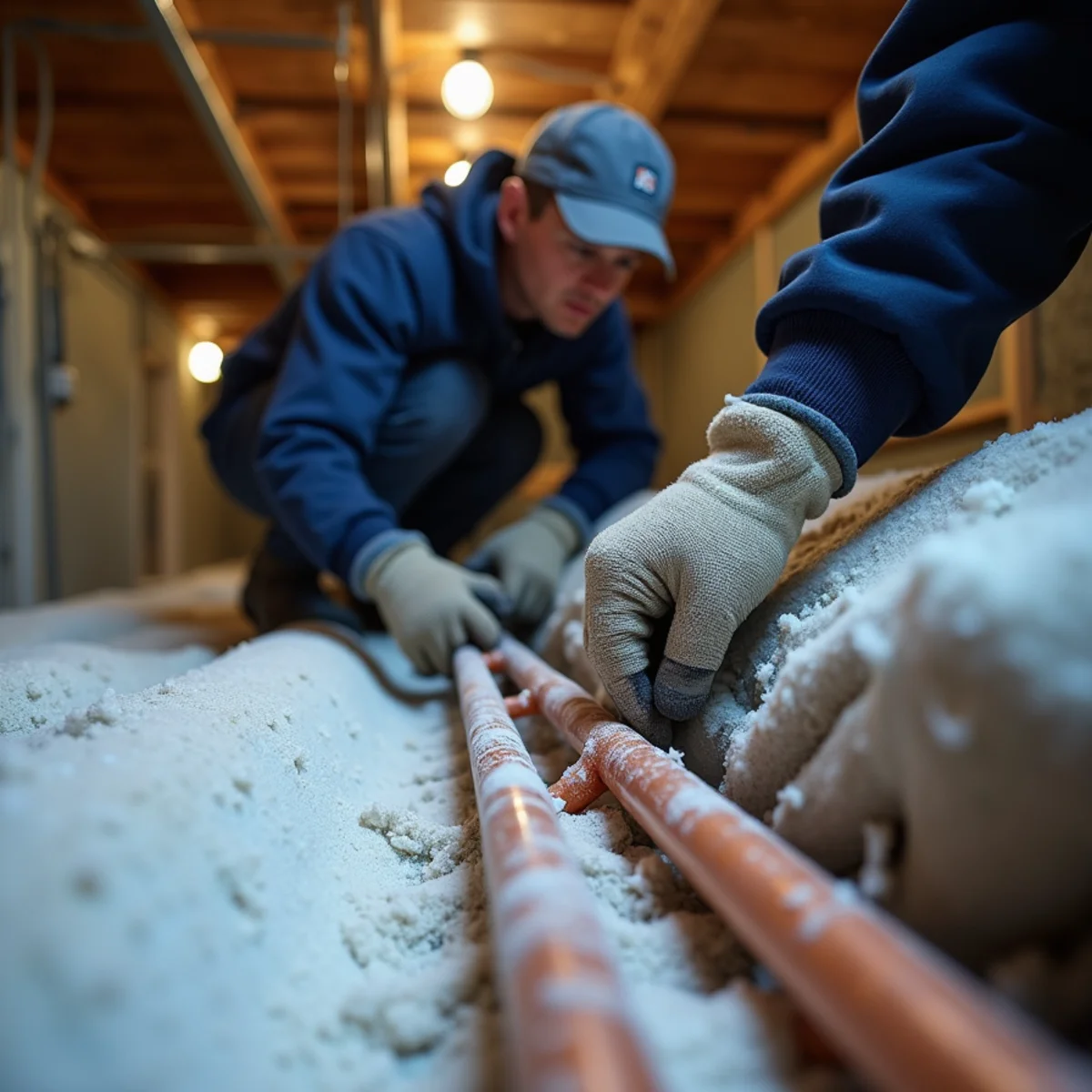
That is the conversation we have before leaving. If we counted one failure on sound pipe, a section repair is the right fix. If it is the third pinhole on the same copper run in eighteen months, we will tell you plainly that repiping that run costs less over two years than three more service calls and three more drywall patches. And if the cause was a freeze, we will fix the exposure — insulation, air sealing, or rerouting the run — because repairing the split without addressing why it froze just books next January's appointment.
Quick answers
What is the first thing to do when a pipe bursts?
Shut off the water. Not photographs, not phone calls — the main shutoff, or the fixture stop if the leak is clearly at one fixture. Every other step is worth less than stopping the flow.
Should I turn off the electricity too?
If water has reached outlets, a furnace, a panel or any appliance, yes — but only if you can reach the breaker panel from a dry spot. Never stand in water to operate a panel.
Will my insurance cover a burst pipe?
Sudden and accidental damage is generally covered; damage from a slow leak that went unaddressed generally is not. Photograph everything before you clean up, and ask your plumber for a written cause-of-loss description for the adjuster.
Need a hand with this?
Talk to the plumber who wrote this
We are a licensed, owner-operated shop on Pine Street in Lake in the Hills. Free written estimates on non-emergency work, and a real person answering the phone when it cannot wait.
- 5.0 from 11 Google reviews
- Licensed & insured
- 24/7 emergency service