Leak Detection & Repair
Find the hidden leak before you open the wall — acoustic, thermal and pressure diagnostics, then a proper repair.
Learn more
Artisan Water Group
A slab leak is a supply or drain line failing underneath a concrete floor. It is the most anxiety-inducing category of plumbing problem, because the pipe is inaccessible and every proposed fix seems to start with a jackhammer.
Need this handled today? Call and a real person answers — nights, weekends and holidays included. You get the price before we start.
It does not have to. Locating precisely is most of the job, and there are usually two or three ways to fix a confirmed slab leak — only one of which involves opening the floor. Which one is right depends on where the leak is, what the pipe is made of, and how many other failures the same run has had.
Most homes in Lake in the Hills have basements, so true slab leaks are less common here than in slab-on-grade regions. Where we do find them is in slab-on-grade additions, attached garages converted to living space, lower-level bathrooms poured into a slab, and the occasional ranch built without a basement.
Slab leaks announce themselves indirectly. Recognising the pattern early is what keeps the repair small.
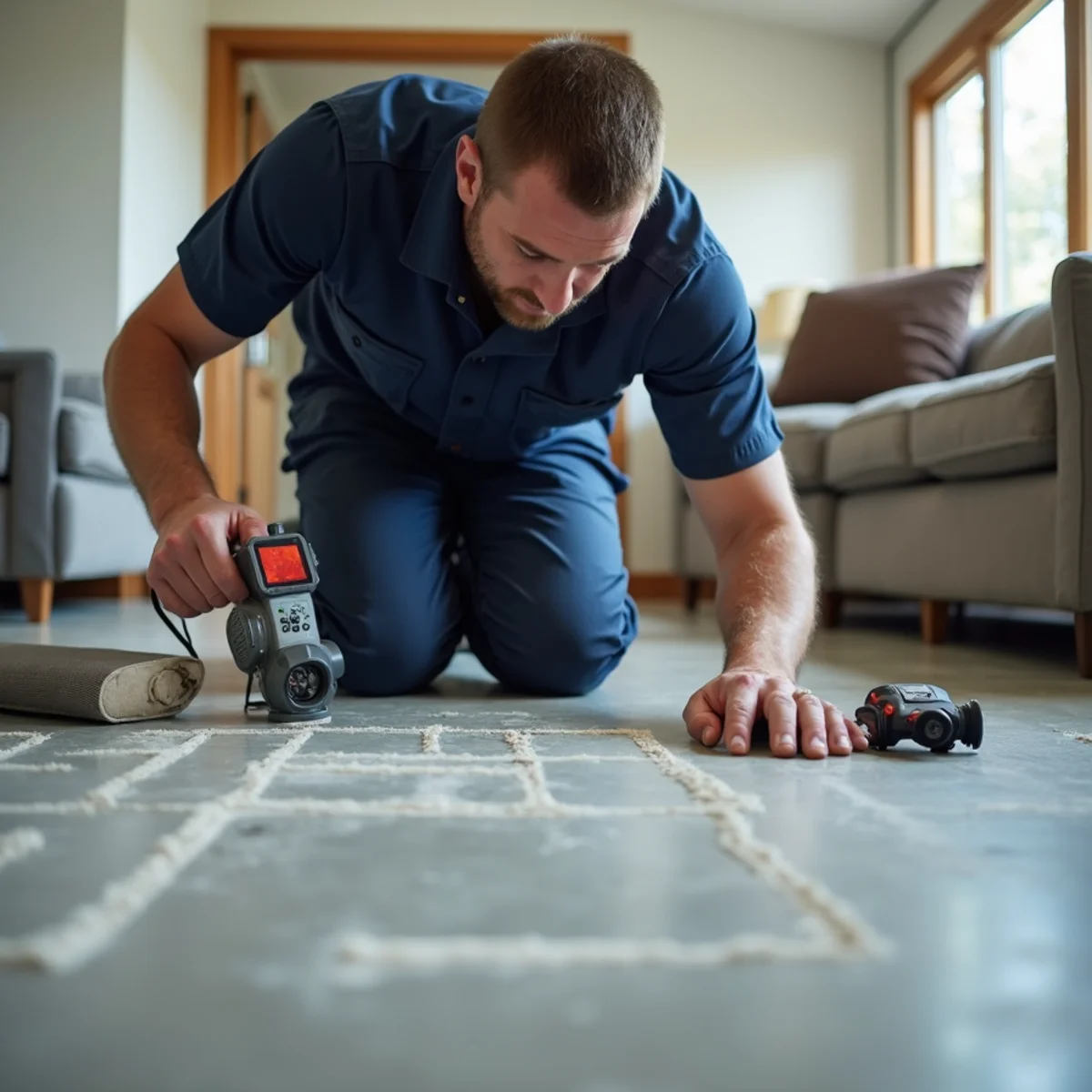
The classic hot water slab leak sign. Pets often find it before people do. On a tile or vinyl floor over a slab it can be quite distinct.
Put an ear to the floor in a quiet house. A pressurised leak under concrete is often audible before it is visible anywhere.
Same household, same habits, much bigger number. Confirm it with the meter test — shut everything off and watch the low-flow indicator.
White chalky deposits at the base of a wall, flooring lifting at the seams, or a patch of carpet that never quite dries.
A meaningful loss of system pressure with no visible leak anywhere is a strong indicator that the water is going under the floor.
Moisture under a slab feeds mould in the flooring assembly above it long before anything shows on the surface.
The goal is always to open the smallest possible area of concrete, or none at all.
Meter test, then isolate the system section by section under pressure. Plenty of suspected slab leaks turn out to be a running toilet or a failing water heater, and it costs nothing to rule those out first.
Isolating the water heater and re-testing tells us which line is losing. That halves the search area before any equipment comes out.
Ground microphones hear pressurised water escaping under concrete. Thermal imaging shows the heat signature of a hot line leak through the floor. We want two methods agreeing before anyone marks the slab.
Spot repair through a small opening, rerouting the line overhead or around the slab, or repiping the affected run. Each has a different cost and a different disruption profile, and the right answer is not always the cheapest one today.
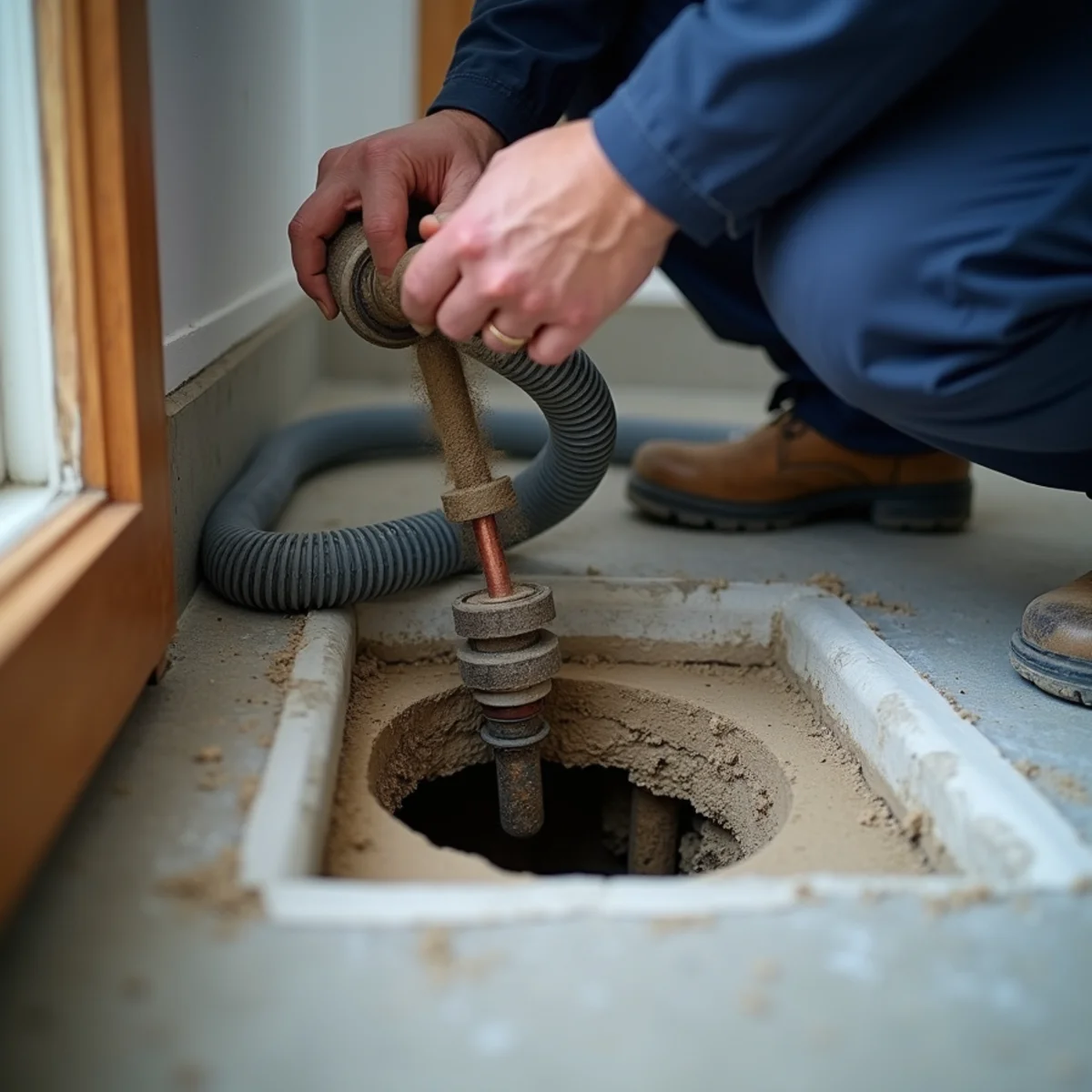
If we open concrete, it is a contained cut with dust control, the repair is made in accessible fashion, and the slab is patched properly. If we reroute, the abandoned section is capped correctly.
System back up slowly, held and verified. Photographs and a written cause-of-loss description for your insurer, because sudden slab leaks are frequently a covered claim.
Three real options, and the honest answer depends on the pipe's history rather than on what is easiest.
A spot repair opens a contained section of slab, fixes the failure, and patches. It is the least expensive option and the right one for a single isolated failure in otherwise sound pipe — a nail through a line during a renovation, or a fitting that failed on its own.
A reroute abandons the under-slab section entirely and runs a new line overhead or around the perimeter. It costs more and it means some drywall work, but the pipe is then accessible forever. This is usually the right call when the leak is in an awkward location or when the slab run is long.
A repipe replaces the whole distribution system, and it becomes the rational choice when a house has produced multiple slab leaks. At that point the pipe is telling you something. Our whole-home repiping page covers what that looks like.
Because almost every home in Lake in the Hills has a basement, the classic slab-on-grade scenario is uncommon here. The places we do find under-slab failures are specific.
Additions poured on grade — a family room or sunroom added behind an existing house, with a bathroom or wet bar plumbed into the new slab. Converted garages, where a slab that was never intended to carry plumbing now does. Lower-level bathrooms where the drain and supply were cut into the basement floor. And radiant floor heating loops, which are their own diagnostic problem.
In all of those cases, the pipe is generally younger than the house and the failure is more likely to be installation-related or damage-related than age-related — which is good news, because it usually means one repair rather than a systemic problem.
Detection and repair price separately, because until it is located nobody can honestly quote the fix.
If we cannot locate the leak, we tell you that instead of charging you for exploratory demolition and hoping.
Shut off every fixture and watch the water meter's low-flow indicator for fifteen minutes. If it moves, you have a leak somewhere. A warm spot on the floor, the sound of running water in a quiet house, or unexplained damp flooring point specifically at the slab.
Not always. Rerouting the affected line overhead or around the slab avoids opening the floor entirely and is often the better long-term answer. When we do cut, it is a contained opening at a confirmed location, not exploratory demolition.
Policies commonly cover the resulting water damage and the cost of accessing the pipe, while excluding the pipe repair itself. Terms vary a great deal. We document the failure with photographs and a written cause description you can give straight to your adjuster.
It is urgent rather than instant. Water under a slab undermines soil and feeds mould in the flooring above, so it should not wait weeks. If it is a large-volume leak, shut the main and call — see our [emergency plumbing](/services/emergency-plumbing-lake-in-the-hills) page.
Yes, and those are harder to find because they only leak when something upstream is draining. They usually present as damp flooring or a sewer smell rather than as a pressure loss, and they need a camera rather than acoustic detection.
Often needed together
These come up on the same houses more often than not.
Find the hidden leak before you open the wall — acoustic, thermal and pressure diagnostics, then a proper repair.
Learn moreCopper and PEX repipes for galvanized and failing systems — planned in phases so your water is back on every night.
Learn moreA real person answers, a licensed plumber rolls, and you get the price before any work starts — nights, weekends and holidays included.
Learn moreWorth reading first
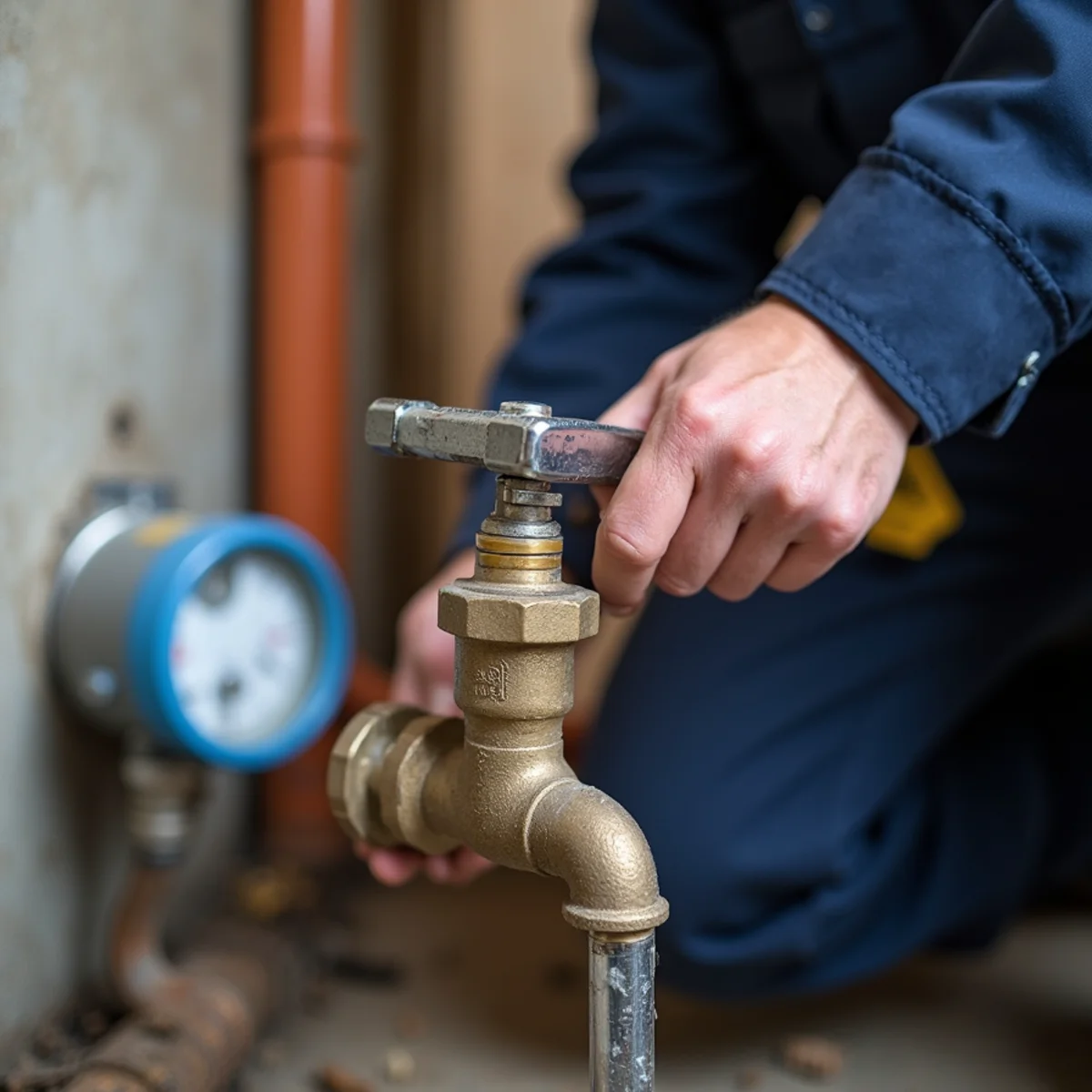
The five minutes between a pipe failing and the water stopping determine whether you have a repair or a remediation. Here is how to win those five minutes.
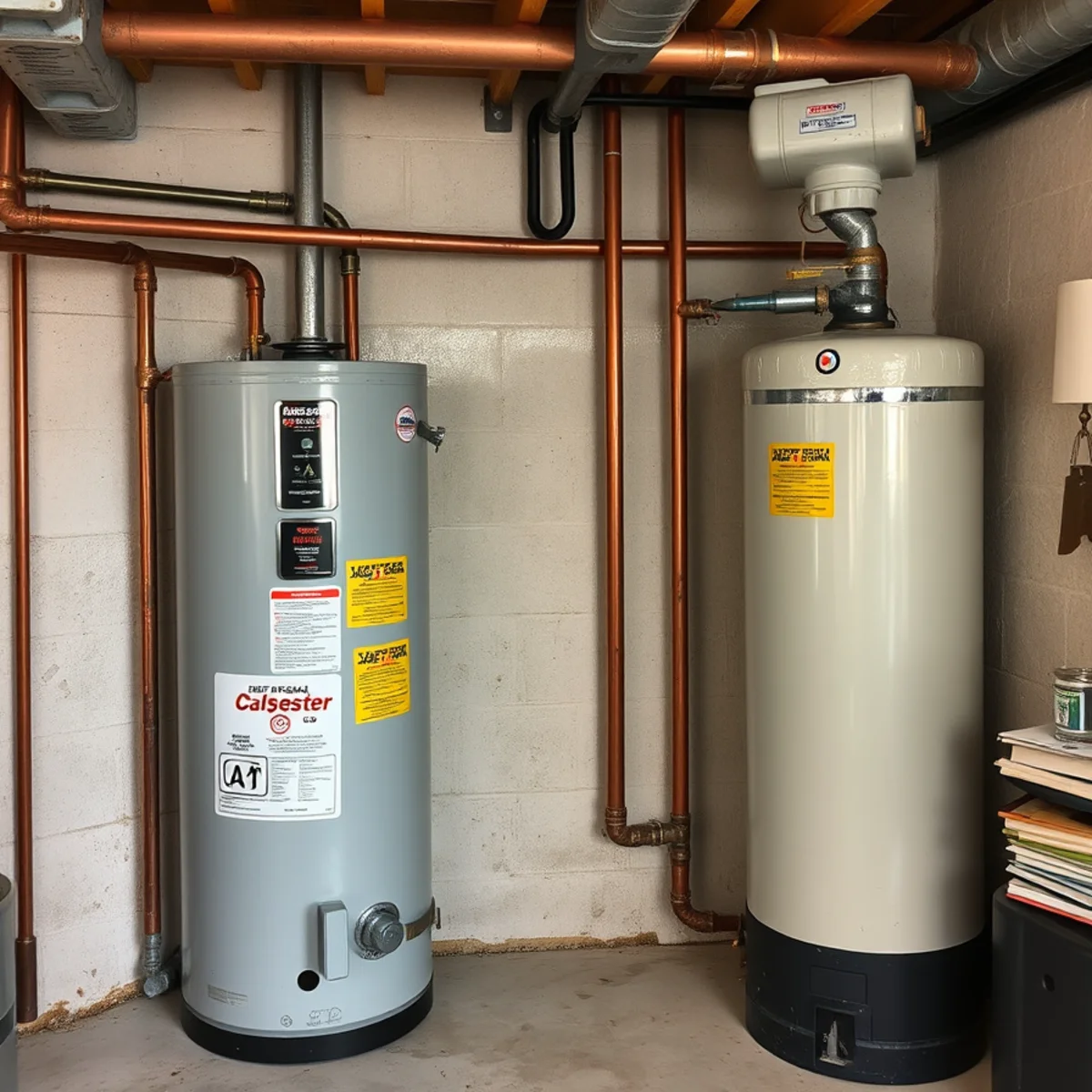
When a whole subdivision goes up in three years, its plumbing ages out in three years too. If your neighbours are replacing water heaters, you are on the same clock.
Slab Leak Repair
Call and talk to the person who will do the work. Free written estimates on non-emergency slab leak repair, and a price before we start on anything urgent.
Tell us what is going on and we will get back to you with a straight answer. No obligation, no pressure.
5.0 from 11 Google reviewsLicensed & insuredFree written estimates
Our online form is not taking submissions just yet.
Please call (207) 419-2600 instead — a real person answers, nights and weekends included, and we can usually sort it faster on the phone anyway.
We are a licensed, insured, owner-operated shop based on Pine Street in Lake in the Hills. That means the person quoting the job is the person doing it, and nobody here is measured on how much they sold you.
Every recommendation starts with the water. At 26–28 grains per gallon, our supply is roughly six times harder than the national average, and it is the single biggest factor in how long anything in your plumbing lasts. Fixing the symptom without addressing that is how you end up calling someone again in two years.
And when a permit is required — water heaters, sewer work, gas piping — we pull it and show the fee on its own line. Ask every plumber you talk to for the same. Read more in our guide to plumbing permits in McHenry County.